HS30-H
Supporting Member
-
Joined
-
Last visited
Everything posted by HS30-H
-
Polite correction: Matsuo san's given name is usually spelled "Yoshihiko". Regards, Alan T.
-
Joce, Judging by what I see from the photos, those Ampco struts have been modified. That's not what the normal factory adjustable platforms look like. Factory adjustable platforms are unmistakable. They have a very short threaded section with a wide pitch thread, and two fat aluminium adjusters. Yours appear to have a longer threaded section with a finer pitch thread, and a collar of some sort at the bottom. Possibly modified by a previous owner to give more height adjustment range, or to replace damaged threads? Springs look a little longer than my original Sports Option items too. Earliest ones were black, later ones blue. Yours possibly replaced with longer ones to suit the ( possibly? ) replaced adj. platforms? Are the part numbers on the springs? Don't know if that helps at all....... Good luck, Alan T.
-
Just a thought - but did he mention Versions D, E and F.....? Seven shots at getting it 'right' is a fairly low batting average, isn't it? As far as I've been told, the 240ZG was given the 'G' suffix in it's name as a reference to its so-called "Grande" nose. You can see this spelled both "Grande" and "Grand" in Nissan documentation, but it was also called the "Aerodyna" nose ( short for 'Aerodynamic" of course ) in official docs. I've never heard any stories that it was actually a 'Version G', and that story seems a little bit too convenient to me. If a 'Version F' had been decided as the final version, would they have had to come up with a nickname starting with the letter F...? In any case, Matsuo san wouldn't have been the one tasked with naming the product. That wasn't his remit. Do you think it's possible that a little something in the story got Lost In Translation? Matsuo would of course talk about versions by giving them letters ( A,B,C,X,Y,Z or whatever ) and/or numbers ( logically staring with 1 ) as they would probably have done this at Nissan too. There could have easily been a Version A, B and C of what was to be called the 'Grande' nose - so both could be correct. I'm up in Hokkaido on holiday at the moment, and will be stopping over in Tokyo for a few days on the way back. If Matsuo san is home by then, I might ask him to clarify. If he's recovered from his trip, that is..... :classic: Alan T.
-
Here's the result from the Bonham's auction at the Silverstone Classic meeting on 24th July: Lot No. 119 - 'Big Sam' - reached a Hammer Price of £70,000 - so with the Buyers Premium and taxes, the new owner will have paid a total of £79,987.50 ( that's the equivalent of around $122,750 US at today's exchange rate ). Not bad. Hopefully the car will see the track again soon.... Alan T.
-
Going by the relatively high engine number of that L20 block, I wouldn't rule out the possibility that the whole engine could be from a later model - very likely a Japanese market S130-series Fairlady Z. That would explain some of the "ZX-like" parts seen on it. I can understand why people might point at what they call "280ZX" parts and details on such a car, but the "ZX" variants were Export models, and this car would have spent the first years of its life in its home market of Japan. Japan had the non-'X' S130-series Fairlady Z, Fairlady Z-L, Fairlady Z-T, Fairlady 280Z, Fairlady 280Z-L, Fairlady 280Z-T and their '2/2' variants ( I've listed them up on this forum in the past ) and one of the 2-litre models could have donated an engine ( and steering wheel! ) to this car whilst it was still in Japan. I agree. Many of these Japanese home market cars that turn up 'out of market' are what I call "G.I. Brides". Two of my own cars here in the UK were originally imported by USAF personnel who had been posted to Japanese bases and then posted to UK bases on their 'rotation' tours of duty. They bought the cars in Japan, used them there ( RHD in an RHD country ) and then had them transported - gratis - to the UK as part of their allowance, and used them here ( again, RHD in an RHD country ). Some of these personnel were posted on 'exchange' with Royal Air Force personnel before finally going home to the USA, like the first owner of my 1970 Fairlady Z-L - Sergeant W.P. Comstock. Wonder if he's still around? I know of at least 15 Japanese market cars which arrived here in the UK as such 'G.I. Brides'. On returning to the USA, their owners sold them here. I have been told that it was an accepted practice which helped to give them a little extra 'pocket money' on returning home. Makes sense. More to do with the national speed limit in Japan than the capabilities of the car, I think. Not that the car couldn't manage 180km/h, or that there was nowhere in Japan to do it ( there was ), but more that you had no business to be doing 180km/h or more on public roads in Japan at the time...! Alan T.
-
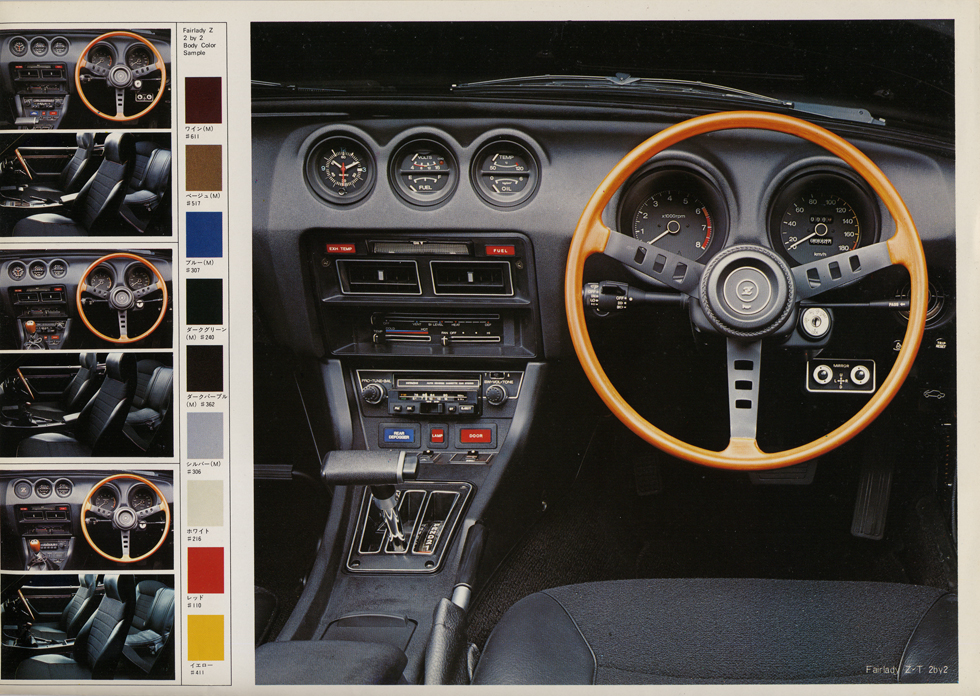
Yes, this car would originally have had a 180km/h speedometer. I would guess that this was swapped out when the car went to the USA. You can see what the km/h speedo looked like if you blow up the brochure shot of the dash from my first post.
-
Kats, Ah yes, I think I must have been remembering the Club S30 discussion. I knew you'd pointed something like this out before. Japanese press / marketing division of Nissan must have got their hands on some very early cars! Cheers, Alan T.
-
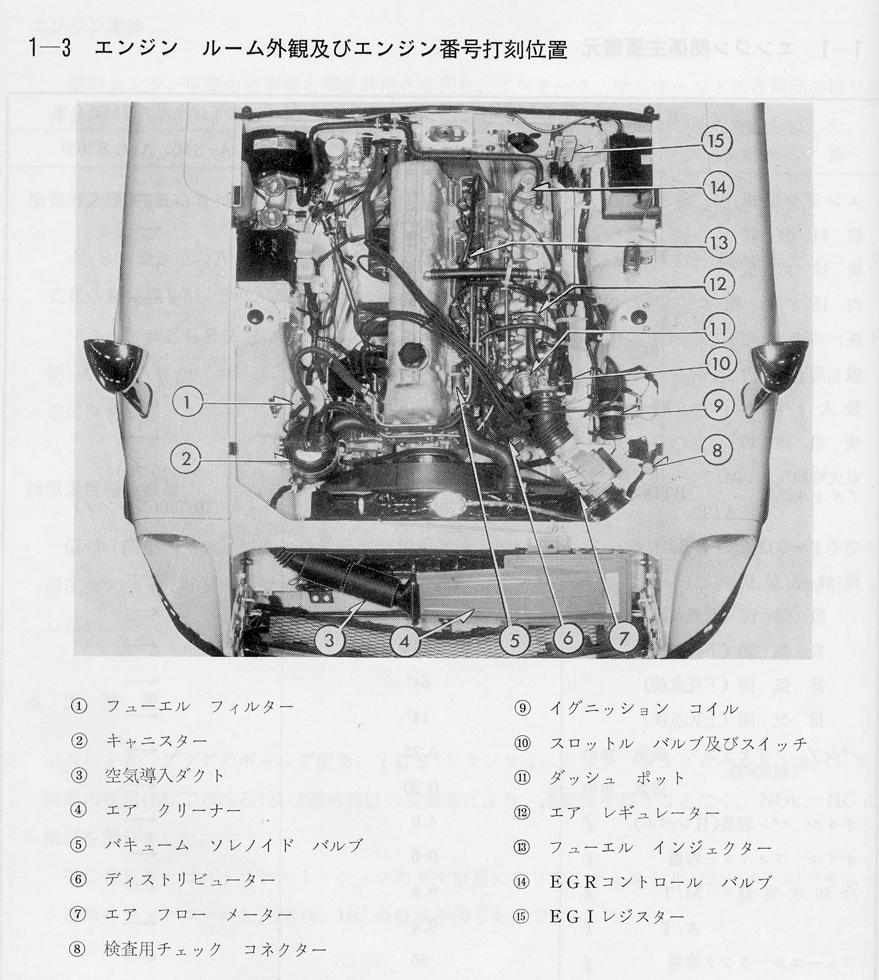
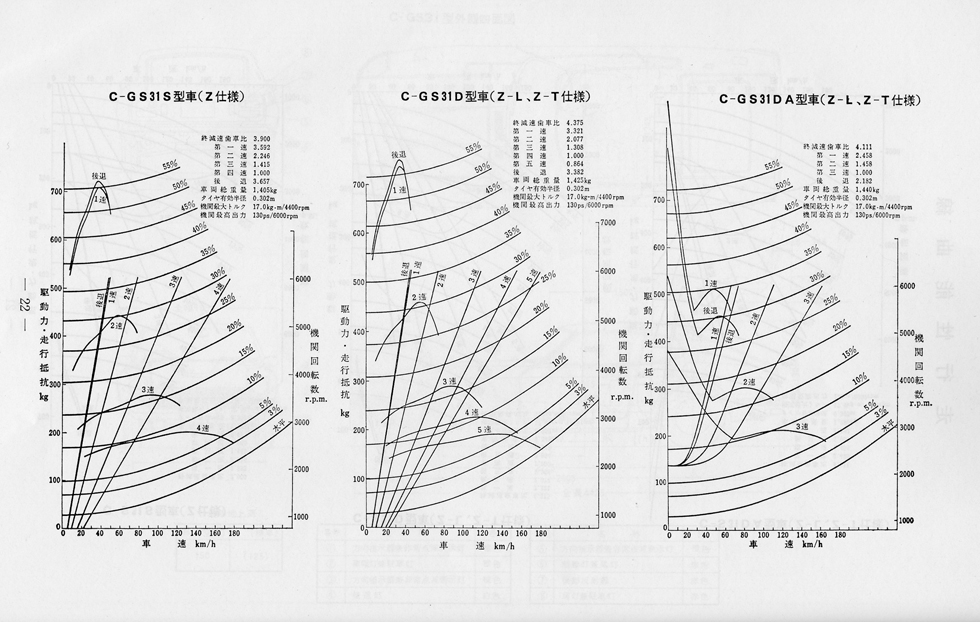
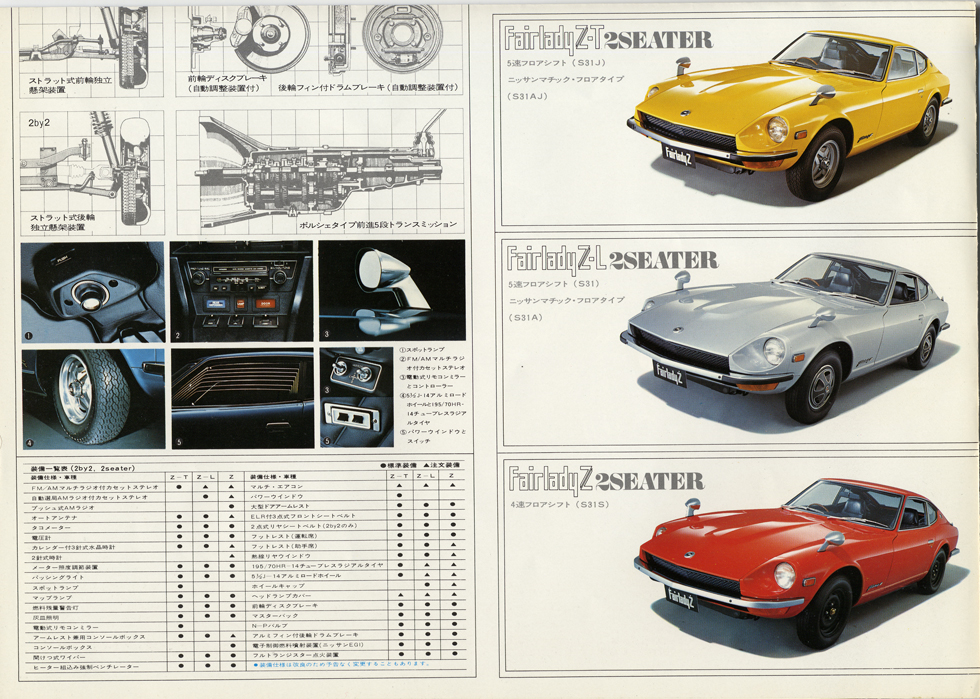
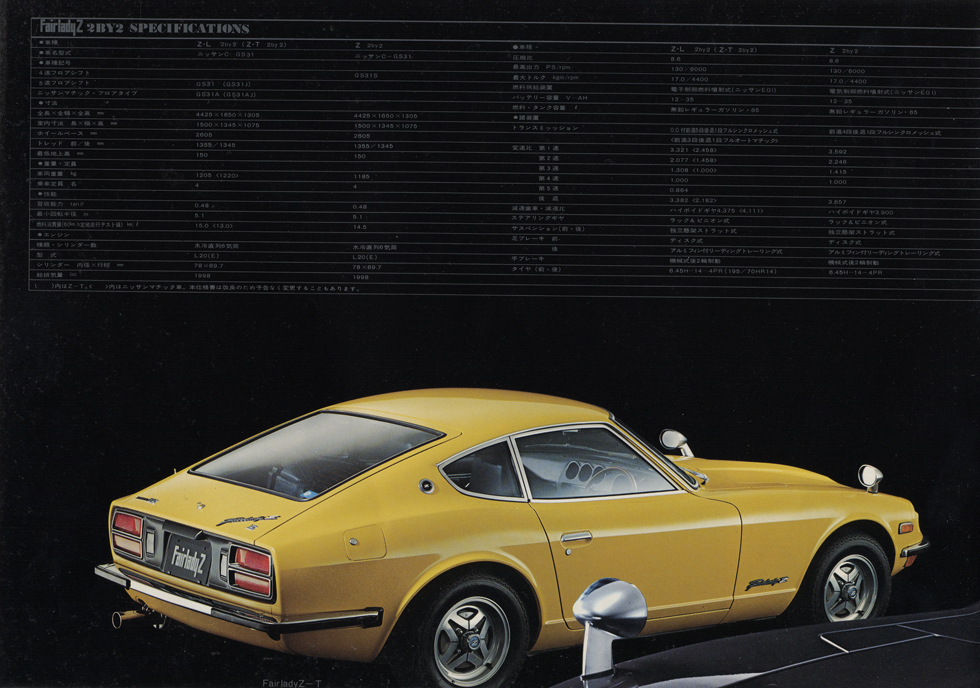
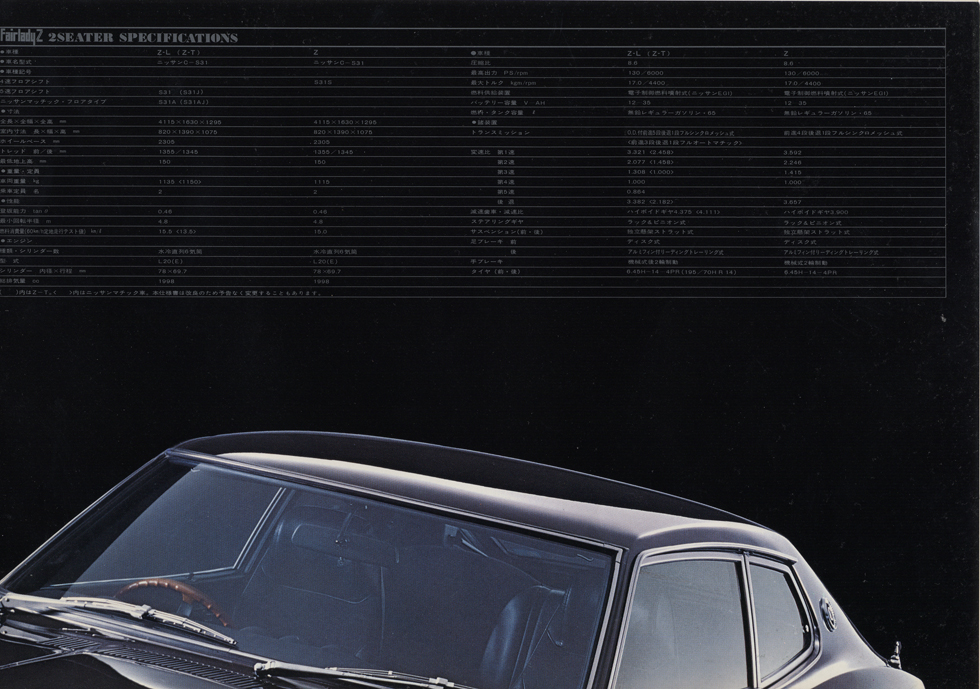
Good points. In fact, when a car like this ends up 'out of market' it is not all that surprising that it starts moving away from its factory specification. Oftentimes this will be due to a make-do-and-mend scenario, or just lack of data. As I mentioned in a previous post, the 1976-on S31 model range had to comply with a new set of Japanese emissions and safety standards. The engines used NAPS ( Nissan Anti Pollution System ) along with TCS ( Transmission Controlled Spark ) on the manual trans, and there were some updates for 1977 & 1978 for which I don't have data to hand. I'm certainly no expert on the later injected Nissan L-series engines, so I'm afraid I can't tell you what's different between the market models. This particular car - as evidenced by the extra bells and whistles such as the electric windows, remote control mirrors and the eyeball interior lamp - appears to be a Z-L or Z-T model ( not the plain vanilla 'Z' standard model ) and therefore would have had a 4.375:1 diff ratio. With an 8.6:1 compression ratio peak power was 130ps at 6,000rpm and peak torque was 17kg-m at 4,400 rpm. It would have felt reasonably lively for the period. Perhaps not quite the slug you might expect, and the 2 litre engines always like to rev and should be fairly smooth. Here's a scan of a factory engine bay pic ( note that this is the 1976 at-launch spec, so a 1977 build car may have moved on from this ) and some graphs illustrating gearing and power etc: Alan T.
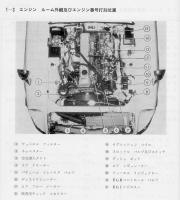
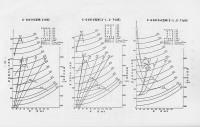
-
Yes. Now you mention it, it does seem a little far back from the edge. And you're making me think that the bulge on the bonnet is shorter than normal too...! What do you think, Kats? Very early ( pre production ) car? Do I vaguely remember you pointing this out before?
-
Carl, Yes, looking again at the photo I can see what appears to be the factory electric window switch present on the door ( but no door panel - which would have been special for the elec window version ). I think I should have all the parts manual references / wiring diagrams etc etc for these, if anyone needs them? Cheers, Alan T.
-
I can't see anything unusual. I think it's a 432 because I think I see the mag wheel centre caps sticking out. Come on, what have you spotted Kats?
-
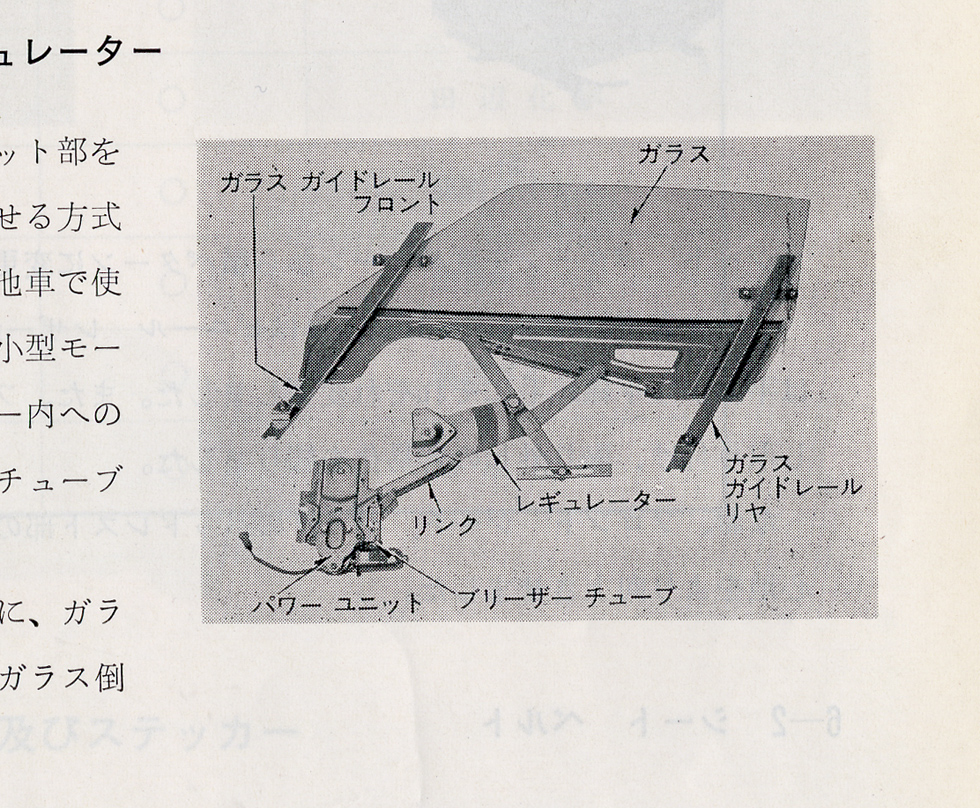
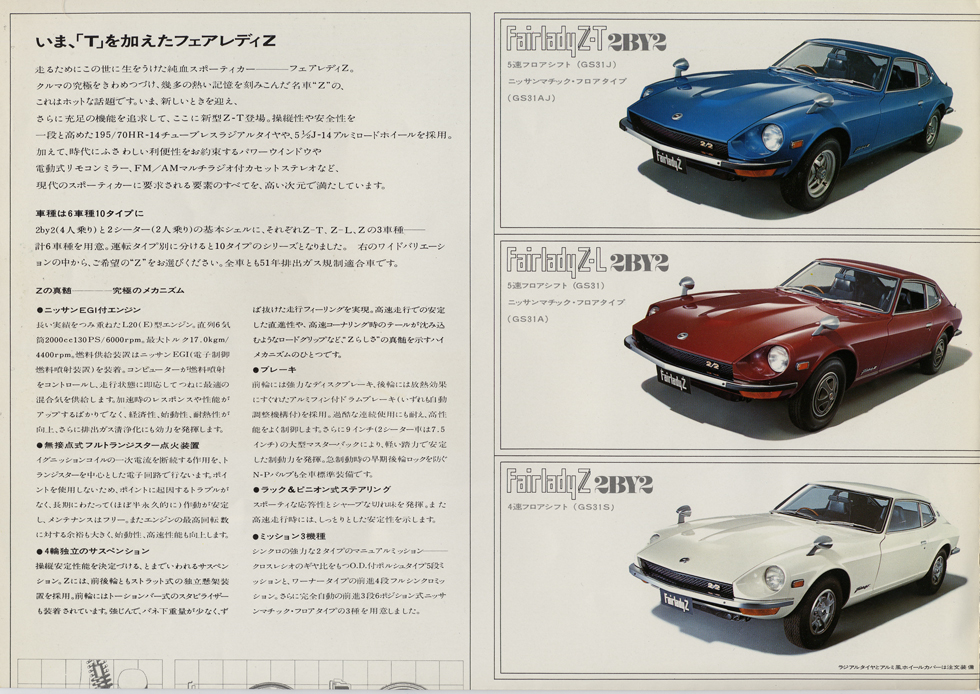
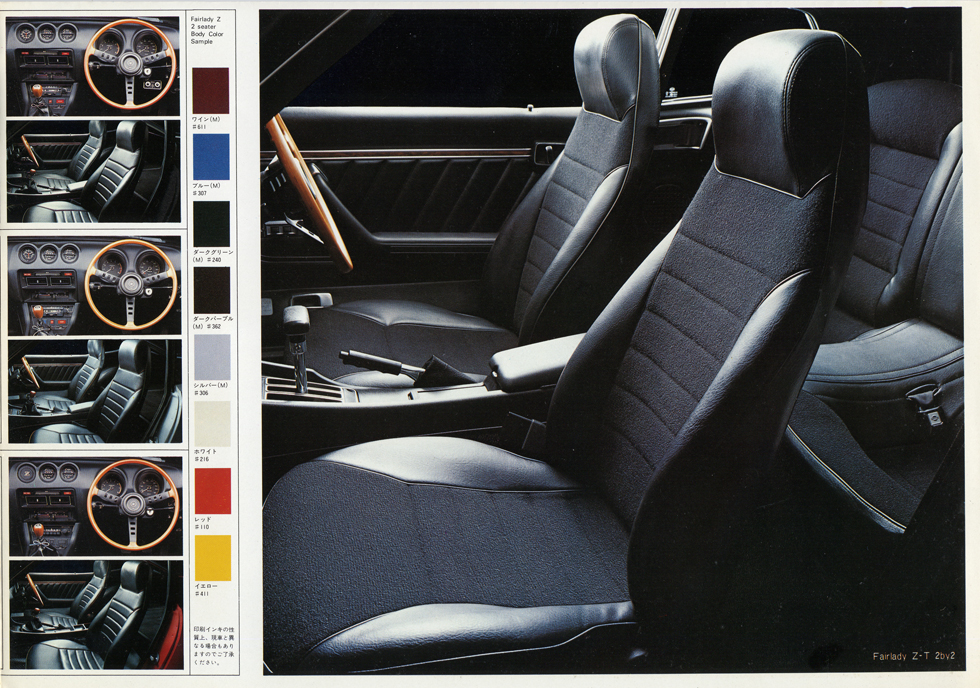
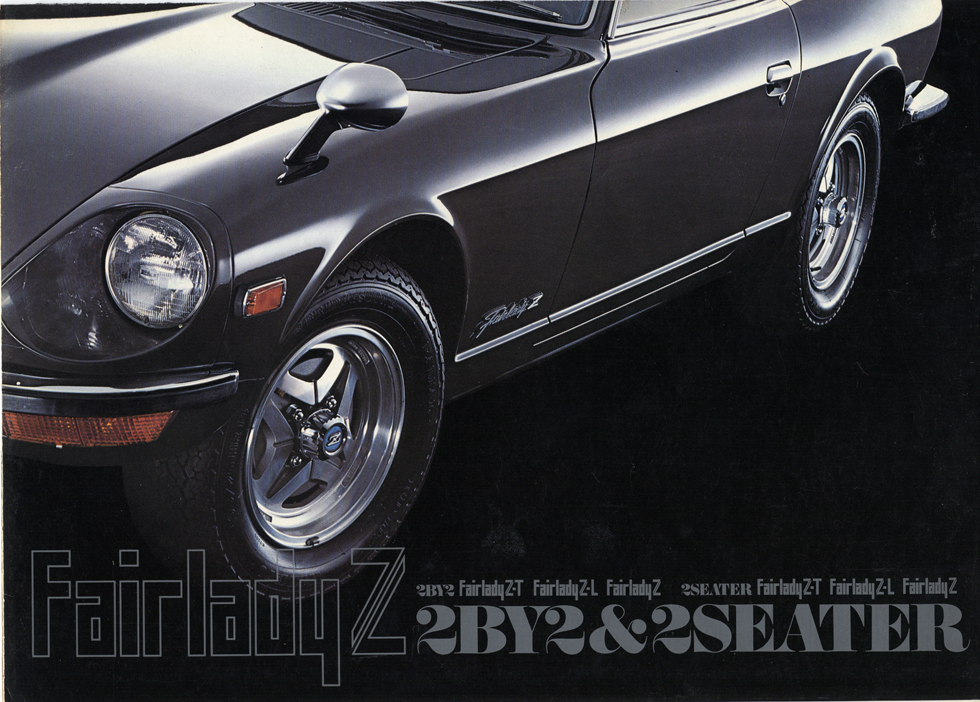
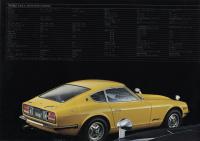
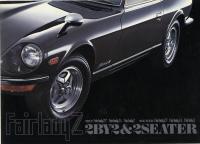
Arnie, A 'GS31' prefix indicates a '2/2' variant Fairlady Z, Fairlady Z-L or Fairlady Z-T model made after the big update to Japanese safety and emissions standards in 1976. The 'S31' prefix indicated the compliance to the new standards, but it was still technically part of the S30 series. Body serial number 010623 on a GS31 prefix would imply 1977 build year, and likely June to August build months ( you can cross-reference parts on the car for a more accurate build date ). Engine would have been an L20 six with Nissan EGI injection, and NAPS ( Nissan Anto Pollution System ). Transmissions on these would have been either 4-speed manual, 5-speed manual or Auto, depending on model and/or chosen options. Lots of interesting little doo-dads on these cars: Higher-specced models had electric windows, remote-adjust mirrors and 'eyeball' interior lamps etc. If you plan the part out the car, you might get some interest from the HybridZ crowd as a parts donor for LHD to RHD conversion? Oh, and I think the handbrake / emergency brake needs adjustment...! Here are some S31 sales catalogue scans that you might find of interest: Cheers, Alan T.
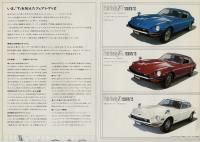
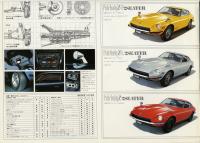
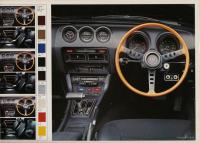
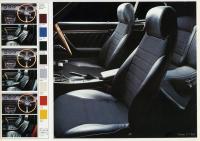
-
Aaaargh! It's all true....! Seriously though, there's more wrong than there is right in that article. I was completely astounded at the story of the loading ramps for the transport ships. It only takes a moment of thought to understand that a 'normal' freighter ship couldn't be converted to a makeshift 'Ro-Ro' car transporter just by adding a ramp to it. The whole structure of the ship needs to be dedicated to driving cars on and off, and that's why purpose-built car transporter ships were added to the fleet when increasing Export volume made it a necessity. Somewhere deep inside each of these stories is a tiny seed of truth that has been exaggerated, misunderstood and repeated many times with extra embellishments over the years. They have grown up with very little resemblance to the simple, and sometimes rather bland, truths that they were based on, and some of the characters involved in the stories have started to believe them themselves. We - the gardeners - really ought to be pruning back some of these stories, and doing a little weeding. Alan T.
-
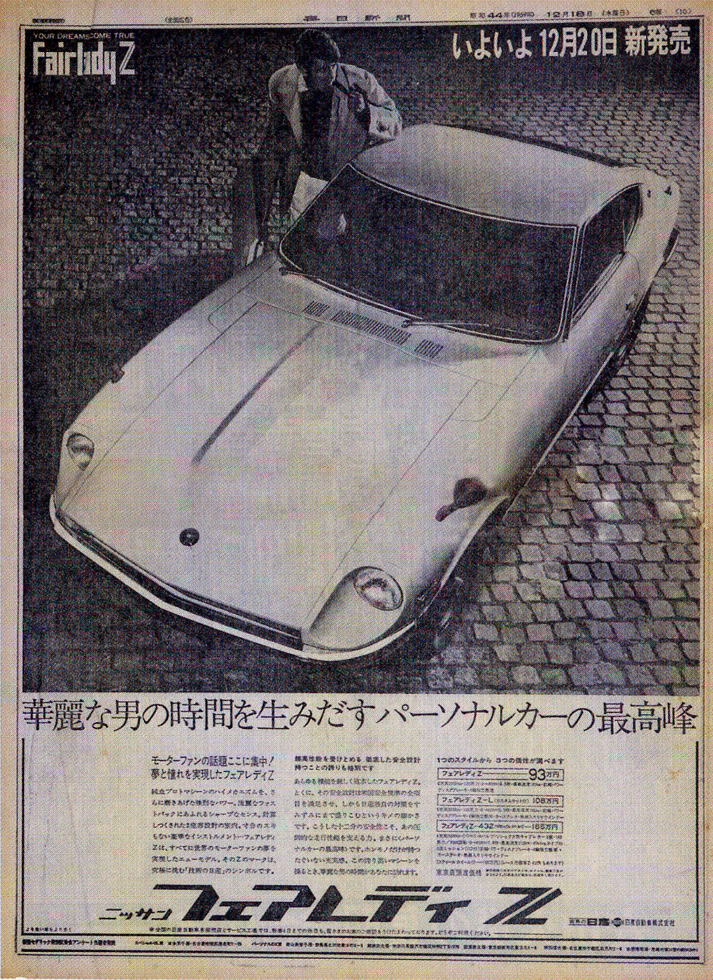
Chris, The first ad ( 20th October ) was a Z432, the second ad ( 2nd November ) was a Z-L and the third ad ( 20th December ) is hard to see from the angle, but I suspect is a Z432 again. These cars - and the cool westerner with the pipe! - were used on the ( colour ) ad campaigns used in magazines too. They would, I think, have been very low serial number cars. No idea of numbers though....! Alan T.
-
Mike, Just to clarify - This was a series of ads, with different release dates. The first was used from 20th October 1969, the second from 2nd November 1969 and the third from 20th December 1969. The dates can actually be read from the tops of the newspaper pages too ( the '44' means Showa 44, ie 1969 ). Any scans of the original newspaper pages will naturally be quite poor quality, which is just the nature of newsprint I'm afraid. Here's the third ad in the sequence:

-
Thanks Ron, BRE should have you on their payroll..... Cheers, Alan T.
-
You're going to need more than just a pinch of salt on your popcorn..... Without wishing to upset anyone, some of the statements from that article are ludicrously far-fetched, and it is peppered with mistakes and exaggerations. Doesn't anyone ever edit or critique this stuff before it goes online? The line about the "handshake deal" over sales of the Toyota 2000GT and Datsun 240Z might very well take the biscuit. Those models were hardly even on sale at the same time, let alone seriously competing with eachother in the USA market. Next instalment: 'How Mr K. invented the wheel'... ? * *Don't laugh, it's quite possible...
-
Chris, Maybe try clicking on the links from the original page: http://www.yomiuri.co.jp/atcars/history/20100629-OYT8T00554.htm Does that work for you? These were full-page ads, as part of the 'Your Dream Comes True' campaign for the Fairlady Zs, taken out in several Japanese Japanese newspapers ( not just the Yomiuri Shimbun ). The first was published on October 20th 1969 - just two days before the Tokyo Motor Show opened to the public. There were actually three different full-page newspaper ads, but the Yomiuri Shimbun history page only shows two of them for some reason? Great stuff, Inf. Thanks for posting! Alan T.
-
That's a funny looking Camaro...... Thanks Ron, Sorry to trouble you with this at a busy time. Cheers, Alan T.
-
The perhaps not-so "big problem" was what was originally written on the BRE website. See a quote in post #2 of this thread. See also posts #20 & 21. BRE changed the text on the rear spoiler blurb. However, they might need to change it again. According to Carl, it might be more accurate if they change the text to "..this rear spoiler was originally designed for the Chevrolet Camaro...." :classic: Ron, I think you're right. Although that ribbed rear spoiler was originally designated for the PS30-SB 'Fairlady Z432-R' ( note the 'R' ), and was initially developed and homologated by Nissan's competitions department at Oppama. It was then adopted as an option for other Z variants before launch. I think the BRE site is still somewhat confusing, and also wrong about the height issue. If you order a rear spoiler from their website today, do you receive the 'ribbed' ( 432-R ) type, or the later, taller, non-ribbed type - as per the old Interpart catalog? They appear to illustrate the 'ribbed' version...... Alan T.
-
Wrong, Carl. Nissan did have their own full-size wind tunnel at their Chuo Kenkyujo facility. They also contributed to the building and running costs of the university wind tunnel you mention, as this kind of philanthropy would help to produce graduates who were skilled in the use of such facilities before joining the Nissan workforce. It's all written up in Nissan's 1964-1973 ten-year report book, including the financial reports. Alan T.
-
Now Carl, you know what I'm talking about here. I'm not talking about the theory and concept of rear spoilers in general ( of course not ), I'm talking about the size, shape and fitment of that particular rear spoiler, and I'm quite sure you know that. I look forward to seeing you apply the same kind of warped semantics to the rest of the car. When you meet up with Yoshihiko Matsuo next week, you'll be telling him that his title of 'Chief Designer' on the 'Maru Z' project was false, as nothing on the car had been 'designed' first by Nissan. Here's some advice: Don't. It's going to sound a little silly..... I see we are back "here in the U.S." again, and the rest of the automotive world is playing catch-up. After all, your President claims that the USA is "...the nation that invented the automobile..." So whilst we have your attention, perhaps you'd like to comment on the claims made in this thread that both Pete Brock and Carroll Shelby had design and/or engineering input on the S30-series Z before launch? If I popped up and claimed that Mike Costin and Colin Chapman had contributed to the design process, I'm sure I'd be inundated with requests to both prove and quantify it. Shelby ( ) and Brock perhaps sound a little bit more likely as candidates to you, I guess? After all, those 'Japs' just copy everything, don't they? Especially when they are designing an "American Car, Made In Japan"....... Or is it just a matter of semantics....? Alan T.
-
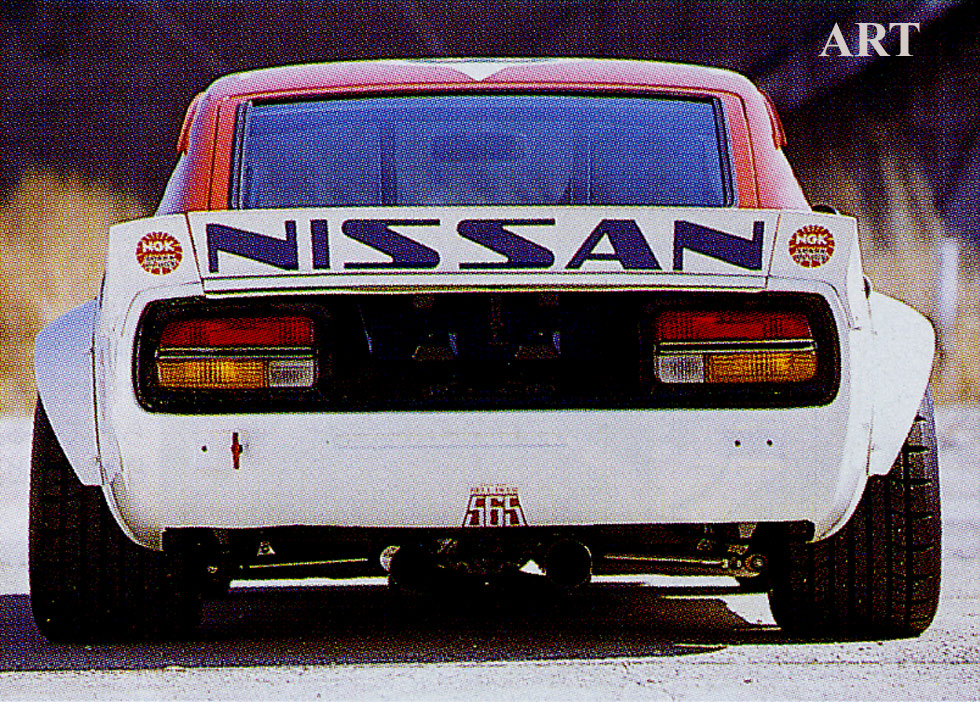
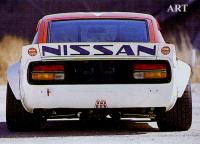
gnosez, I'm fairly sure that one was a purely American design. Certainly not a 'factory' / Sports Option part in Japan as far as I'm aware. By late 1972, the Nissan works race cars in Japan were using the big three-piece rear spoilers, like this:
-
You're right, Mike. They've changed it. In reaction to this thread, no doubt. They illustrate the ribbed rear spoiler ( as seen on - for example - the original #46 BRE race car ) but I believe I'm right in saying that the taller rear spoiler was later, and was not ribbed. It was sold with Interpart no.2701010 in the later ( early 1973 ) Interpart catalog. Does anyone ( Ron Carter? ) know for sure that the ribbed rear spoiler seen on the #46 car was actually taller than the factory 432-R rear spoiler? They look the same to me, whilst the later ( smooth ) Interpart rear spoiler does look taller than the later - factory - unribbed rear spoiler. Open question: So which rear spoiler are they putting back into production? The ribbed one, or the ( taller? ) smooth one? Alan T.
-
moonpup, You're making this thread all about me. Have you got anything to add to the subject that's being discussed, or are you so fixated with my scent that you can't see anything else? Where's the "Laidback purist" that you portray yourself as, and where is your sense of humour ( oh sorry, 'humor' )? Sprinkle a few morsels of conjecture / opinion / evidence in amongst your contributions occasionally, for crying out loud. All I ever see you posting are ebay links and comments about what I'm saying or doing. Post something worth reading, worth some discussion. Where's the content? Got any evidence of Carroll Shelby / Pete Brock input on the design and engineering of Nissan's S30-series Z car? Anything.....? Alan T.