
Zed Head
Community Member
-
Joined
-
Last visited
Everything posted by Zed Head
-
"Speedometer" was probably meant to be odometer. You can check your odometer using mile markers on the freeway. They wanted you to check spark plugs because they can indicate how rich the fuel-air mixture is by color and carbon buildup. The smell of the exhaust is also a clue. Does it smell gassy? My 76 suddenly started getting terrible mileage when the fuel pressure regulator (FPR) went bad. Check fuel pressure if you can. It's very important. And you can get a good idea of the quality of the coolant temperature sensor circuit by measuring resistance at the ECU and comparing it to the temperature chart in the FSM. You have a lot of "should"s and "should be"s in your post. You have to get numbers and take a close look to really know. All of your shoulds say you should be getting better mileage. So they must not be what they should be.
-
The aftermarket guys tend to mark their cams. Check the back of the last cam tower. Also, if it's a regrind the base circle will be smaller. The part of the cam lobe that has no lift will be thinner, compared to a stock cam lobe. It is said that you can swap the complete assembly of cam towers, cam and rocker arms from head to head, by carefully adjusting the cam towers before torquing them down. It's not a factory recommended procedure though, just something that has worked in the past. Are you sure the cam is worn and burned. The base circle of each lobe sees essentially no pressure. Only the force of the anti-rattle springs. Post a picture.
-
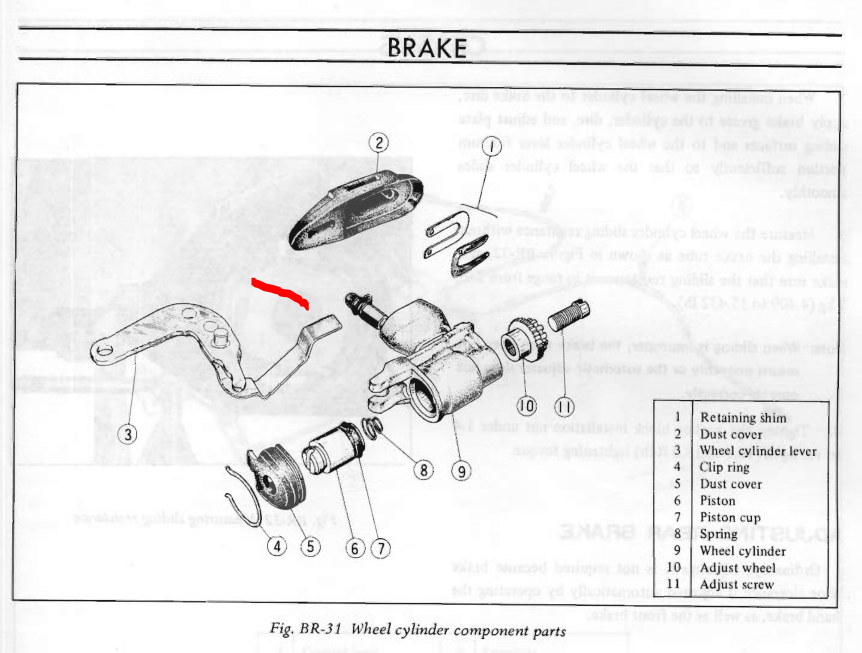
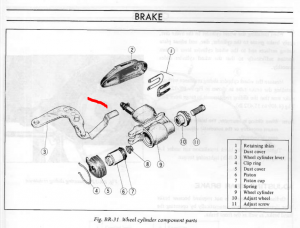
I think that it might be possible for the self-adjusting mechanism to over-turn the wheel in the adjuster. I've studied it and the little arm that grabs a tooth and moves it is meant to have a certain limited travel. So that it can only grab the next tooth after certain amount of wear allows the lever's starting point to drop back to the next tooth. And the width of the arm causes it to ride on top of the teeth until the proper moment arrives. For many brake lever pulls the adjusting arm just slides back and forth on top of the adjusting wheel teeth. Until, finally, it can drop down, grab a tooth, and move it forward. Considering the beating that brakes take when we replace the shoes it wouldn't be a surprise to find that arm malformed or worn. Could also be that the external stop, or bumper, that determines the starting position of the external portion of the brake lever, is allowing it to drop back too far, allowing it to grab a tooth early and move it too far.
-
Thought you were supposed to hold RPM at 2000 for 20 minutes with a new cam to get those surfaces mated with good oil supply.
-
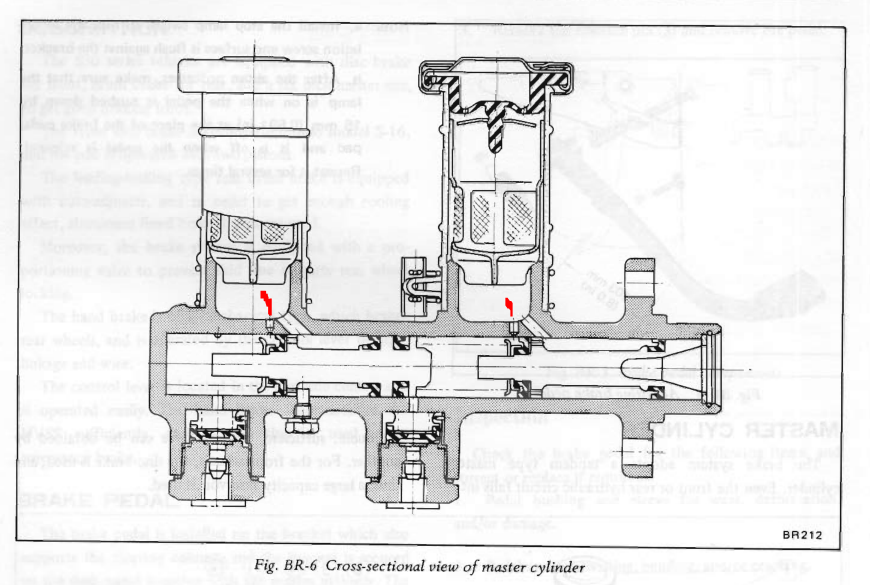
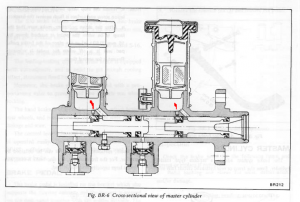
Just for fun, and a reason to study one of these excellent Nissan drawings. As I understand things, it's possible to adjust the MC rod so far forward that the return hole to the reservoir, which also releases pressure, is never opened. Brakes are bled cold, fluid heats up and expands, the pads and shoes are moved, car is slowed. I highlighted the two holes that can get covered. Never had it happen to me but it seems feasible and has been reported. You can see how the piston seals are right next to the holes, so that pressure is created as soon as the pistons move.
-
-
beerman's test is good for the closed reservoir hole I was talking about in Post #2. I know you only asked about the check valve so maybe you're on your own problem-solving path. But you mentioned the brakes being stuck after sitting for 3 days in Post#3, implying that they were frozen after sitting, but now on the last half mile of a test drive. Implying that they weren't stuck when you started the test drive. beerman's test is for a hydraulic lock in the system. Rust and pins are mechanical. I don't see how a collapsed line can hold pressure, unless it was crimped tight, but who knows.
-
Of course, have to ask, are you sure it's the front pads on the rotors? I've noticed that my rotors (or discs - why do we call them disc brakes but talk about rotors?) get rusty pretty quickly. Some surface rust on pads that haven't retracted much could cause sticking, I'd guess. The piston seals are supposed to pull the pistons back, giving the pads some space, as they return to where they were stretched from. The elasticity of the seal material is important. Old or heat-baked seals might lose that quality. I'm also pretty sure that my rear drums rust up quickly too. I always get a light grind when I first apply the brakes after the car sits a few days. Seems to come from the drums though, smooths out right away.
-
Have fun C'man - http://www.classiczcars.com/topic/49754-throttle-opener-control-valve-and-servo-diaphragm-for-a-240z/
-
Get one from a 280Z. They come stock from the factory. You'll have to fabricate a bracket by your throttle linkage and wire up a solenoid valve and vacuum tank.
-
I ponder how to make a 90's era system work on my car. Waiting for my Pathfinder to break so I can cannibalize it.
-
The FSM says to put about 20 inches on it to test leak-down. But I can't see how a bad valve would cause sticking. What kind of sticking? Side-to-side or stuck on? People have over-adjusted their master cylinder rods and closed the return hole to the reservoir. As the fluid heats up and expands the brakes get applied.
-
Monroe's How To Rebuild book says .020" is the most you can shave before needing cam tower shims. Can't remember standard head thickness so can't do the math for minimum.
-
That makes it easy. I've found on the fronts though, that the remans can have the bleed screw hole bored out and rethreaded and a different size bleed screw installed. Just my experience. I never got speed bleeders for the front but did notice the difference when I replaced only one caliper. Which led to unbalanced braking, but that's another story.
-
Referring to Kurbycar32's comment. The switch at the map light itself. If you want to test the wiring supplying power, take a light bulb and attach a wire from the positive feed to one electrode and ground the other. Easiest with a spare light bulb fixture.
-
I've removed several old brake fittings on my car and have decided that going directly to a good pair of locking pliers with clean jaws on a cleaned, filed, smoothed, squared, fitting nut, probably with with applied heat, is the only way to go. Most are stuck, none are easy. Heat makes a big difference. Clean everything, square up the nut flats with a file if they're rounded, lock the pliers on as tight as possible without crushing the nut, lock the body of whatever the nut inserts in to, warm things up to get expansion, then apply torque. When they let go it will sound like it broke. 20 minutes of setup, 2 seconds of effort. If you do have to cut the lines, you can get pre-fitted lines of various lengths at the auto store, and bend to fit. Cheaper and probably more dependable leak-wise, than flaring and fitting your own.
-
Scomell, you might be mixing up your terms. Maybe you meant the light doesn't light even though there is voltage present. That's different than there's no voltage with the light installed. You'll still see voltage with high resistance in the circuit. High resistance won't let enough current flow to let the filament glow. Kurby's dirty switch or connections are likely.
-
I figured so. I was goofing off...
-
Got curious and answered my own question. You do seem to have an issue. From the Isky Cams page. http://www.iskycams.com/cam-degreeing.html IS CAM DEGREEING NECESSARY? Because Iskenderian Cams are manufactured with such high precision you can install them on the stock timing marks without any further checking; however, for those who wish to learn how to properly check and verify valve timing, we recommend the following procedure. - See more at: http://www.iskycams.com/cam-degreeing.html#sthash.ETH1vHN9.dpuf
-
This statement is illogical. Literally. "Positive" means the battery's positive post and "negative" means the negative post. The only way you'll get no voltage is if the battery is completely discharged.
-
Does Isky imply that the factory notch and groove are still relevant or do they say that one of their cams must be degree'd using a wheel? A regrind could have a different centerline. Just curious which marks you're talking about. You're not really degreeing your cam just confirming that the alignment marks are correct. Which, apparently, are not.
-
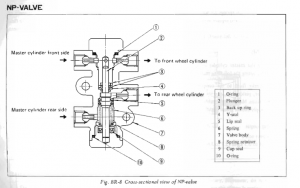
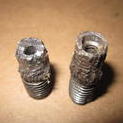
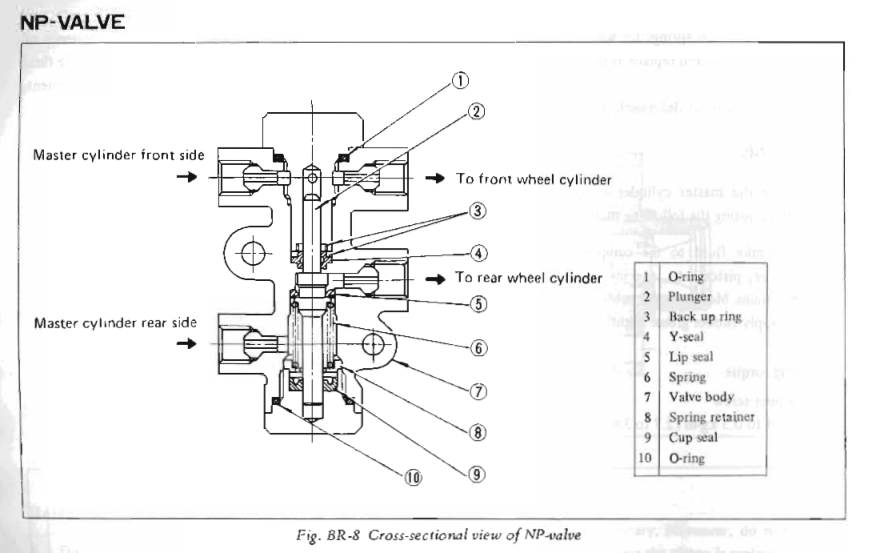
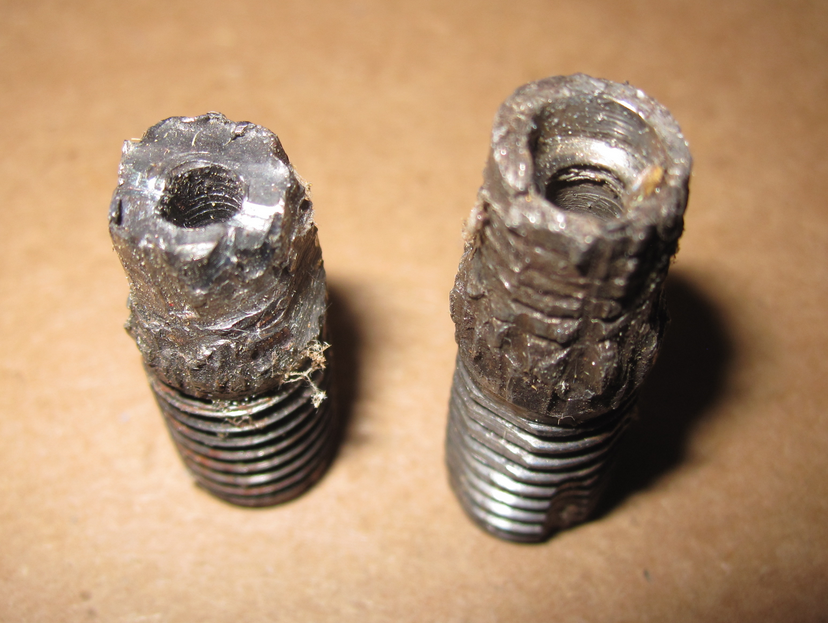
Here's a pretty good thread on the NP valve. Post a thread with "NP Valve" in the title and you'd probably get some more ideas. http://www.classiczcars.com/topic/45461-parts-for-oem-np-valve-and-brake-indicator-switch-unit/ Here's another that mentions speed-bleeders and gunk in the valve - http://www.classiczcars.com/topic/43220-brake-problems/ Forgot to say, if you know the thread size, some auto parts stores carry speed-bleeders. Baxter Auto does, Russel is the brand I think. I can't remember the thread size. Pretty sure I just took a bleed screw in to be positive, and matched it.
-
Pretty sure that you can see some of the synchros and gears through the fill and drain holes. Might be interesting. Curious.
-
Forgot to say, you can only generate about 15 psi of pressure using a vacuum setup. Much more pressure possible using the pedal, even without the booster. Use the pedal to break crud free and push it through, then the vac system to bleed it.
-
You already said "that". Press on the pedal with the bleed screw open and see if anything comes out. They all work the same, master cylinder > brake lines > wheel cylinder. People have reported clogged NP valves. It's documented on this forum somewhere. You can take them apart and clean them up. I installed speed bleeders on mine so that I could push a lot of fluid through easily. Same general concept as SteveJ's method, but easier to set up (for me anyway) and doesn't pull fluid back once it's left.