
Zed Head
Community Member
-
Joined
-
Last visited
Everything posted by Zed Head
-
I think that cgsheen1 and EuroDat are suggesting that drag, of some kind, is causing the shafts to turn in unison in your video in neutral, when they should be disconnected. But your earlier descriptions describes the engine stalling when it was in gear. That would be some serious drag. I'd still be studying the 4th gear hub and sleeve and synchro ring. If a different gear was stuck you'd get a mismatch between input and output shafts. The shaft speeds are matched. On the other side of the adapter plate 5th gear and reverse are on the same shaft. Reverse is just a whole gear moved to mesh with another gear. Non-synchro. 5th gear has a synchro. In the video you engaged reverse. Overall, everything points to a 4th gear being permanently engaged. As the coupling sleeve moves toward the selected gear it engages the synchro ring. The ring contacts the gear cone and friction causes their speeds to match. When the speeds are matched the sleeve slides over the teeth on the gear, transmitting force. I'll bet that the 4th gear synchro is stuck to the 4th gear synchro cone for some reason. Maybe it's broken. I am just exercising my brain, not an expert. But I do remember working on the puzzle in the past. I'd take a really close look at the interface between the ring and 4th gear. https://www.z-services.eu/en/internals/510-oem-synchronizer-ring-240z-260z-280z-280zx.html


-
My understanding of the system is that the detents hold the forks and coupling sleeve close to proper position, and hold them in place, while also preventing two forks from moving at the same time, but the coupling sleeve is held in exact position by another mechanism. Can't remember exactly how but I have a vague memory of the inserts being involved. For what they look like they are surprisingly important. Precision-machined items that must be installed correctly. Watch the video from the other transmission thread and you'll see the sleeves click in to place by hand with no forks or shift rods. When the transmission "pops out of gear" what's really happening is the coupling sleeve is forced out of its position, and disengaging the gear. At that point the fork and rod are just along for the ride. https://www.classiczcars.com/forums/topic/69881-transmission-shifting-issue/page/2/#comment-684152 I think that you got a bad rebuild.
-
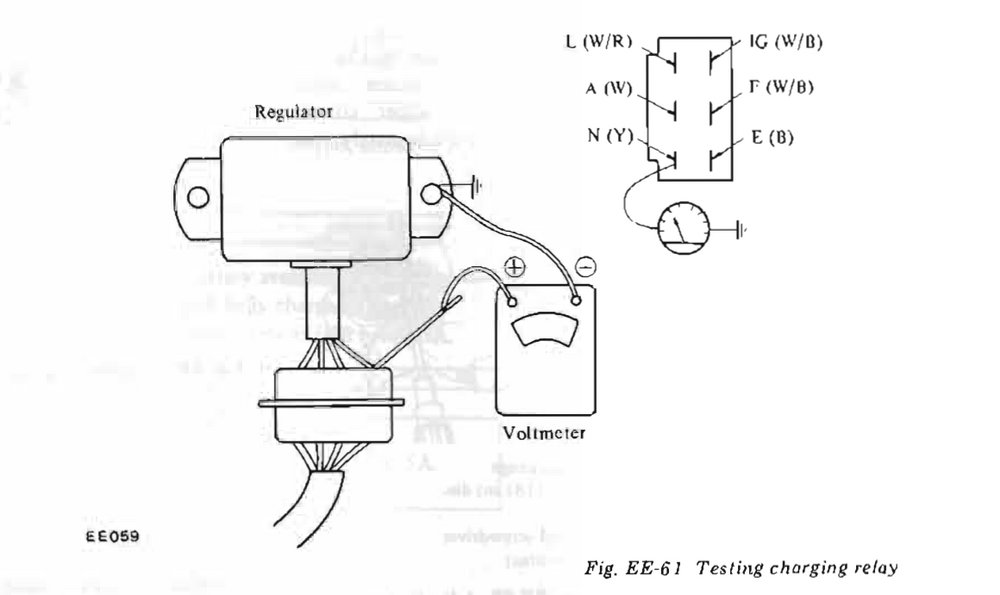
I feel compelled to post again. I misunderstood that you were still using a "stock" regulator. Apparently. My comments above were directed toward the wiring for an internally regulated alternator, with S, L, B, and G. But, it's not clear that you know what you have. You said that you changed the regulator but it's not clear that your regulator is actually wired correctly. The PO might have converted to internal. Why did you change the regulator and why did you run so long with overvoltage (no regulation)? You said that you get 7 volts but didn't say where you were measuring this. Or why you think that you have a "short to hot". A short to "hot" should give battery voltage. About 12.6. Anyway, I know that you asked SteveJ specifically and he answered specifically, but, generally, what you've described doesn't make sense. If you use SteveJ's diagram in Post #2 and the drawing from the FSM you should be able to measure Sense right at the regulator plug itself, see below. The pin to the White wire (A) should read battery voltage. Just unplug it from the VR and measure. If you don't have battery voltage then somebody has messed something up. Sorry for the confusion. Got bored and didn't think it through. Might help you also to post a picture of your alternator.
-
Have you had a good look at the base of the shifter while you're shifting gears? With the rubber boots removed so you can see down to the bottom of the shift lever? You said you have a new shifter bushing but didn't say which one. EuroDat's first link shows a portion of one of them.
-
This doesn't make any sense. (😄) When I first started messing with my VR and alternator I tried to follow wire color instructions from the old internet and I just ended up with problems. So I just figured out what each wire's function was and made my own diagram. Focus on the function and you'll see that you don't need to worry about where a wire is supposed to be. There's only four circuits and two are obvious. Also, your logic in the posts above does not seem right. You might review what's supposed to happen in the alternator before moving forward. Unfortunately there is a ton out there on the internet about sense wires and exciter wires and lamp wires, etc. , and one, two, three, and four wire setups. It's kind of a mess. You might have to wade through some of it to get a good feel for what you want to do. But once you get a feel for the S(ense) circuit and L(amp) circuit it kind of falls in to place.
-
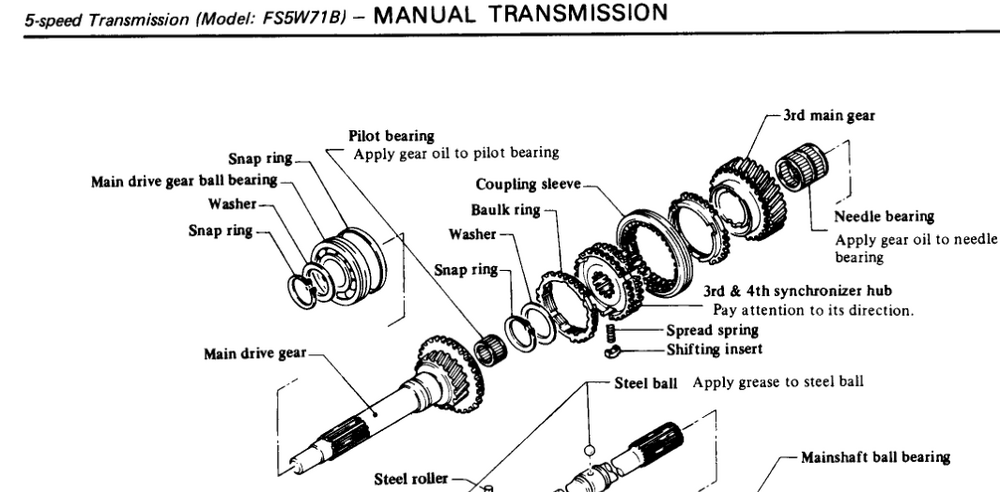
At 1:20 in the second video when it should have been in neutral the shafts seem to be connected at 1:1 when you rotate them like it's in 4th gear. Did you find any metal fragments in the case? Seems like something might be jammed or broken around the 4th gear coupling sleeve. Not sure but I think that something like an insert could do that. Maybe a broken insert spring. Take a close look at each one. They're small and kind of hidden under the sleeve.
-
A bunch sold over the last few days. https://bringatrailer.com/listing/1971-datsun-240z-355/ https://bringatrailer.com/listing/1974-datsun-260z-126/ https://bringatrailer.com/listing/1972-datsun-240z-390/ https://bringatrailer.com/listing/1971-datsun-240z-356/ https://bringatrailer.com/listing/1972-datsun-240z-389/
-
Saturday night's alright...
-
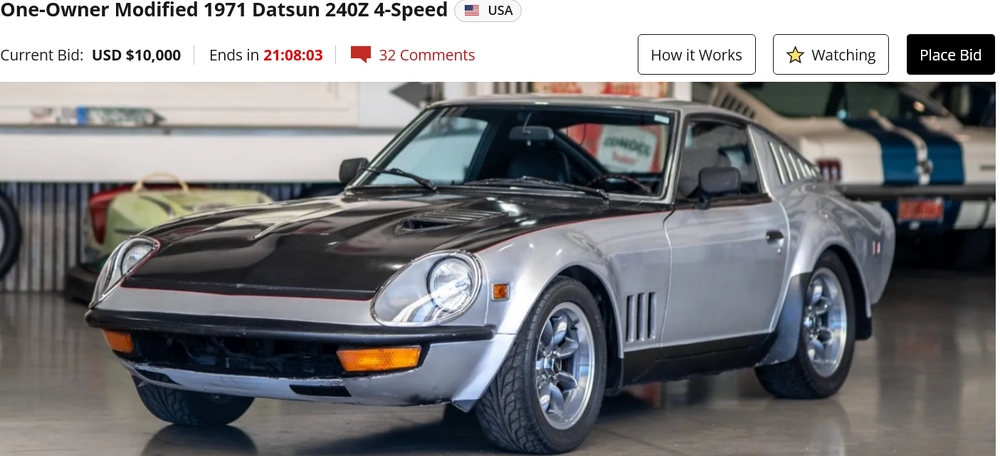
Here's another mod-o-mod Z. Selling (maybe) tomorrow. https://bringatrailer.com/listing/1971-datsun-240z-356/
-
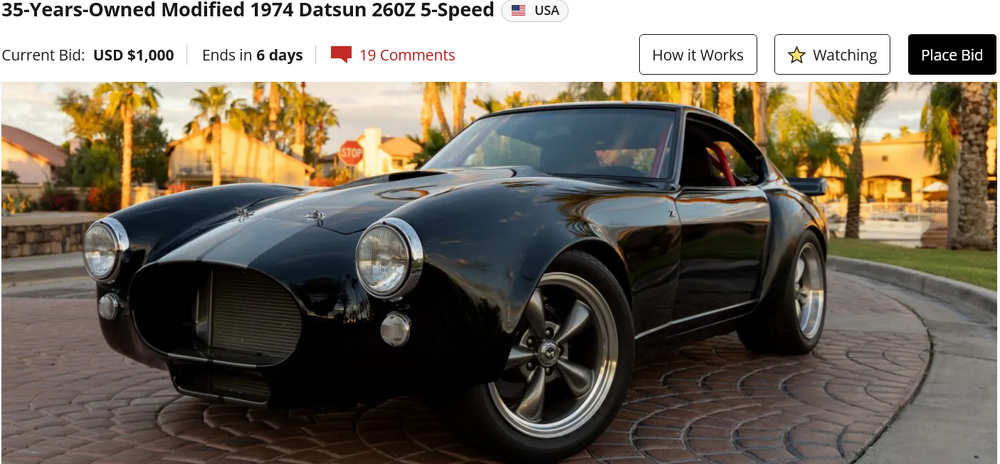
It's there! https://bringatrailer.com/listing/1974-datsun-260z-127/
-
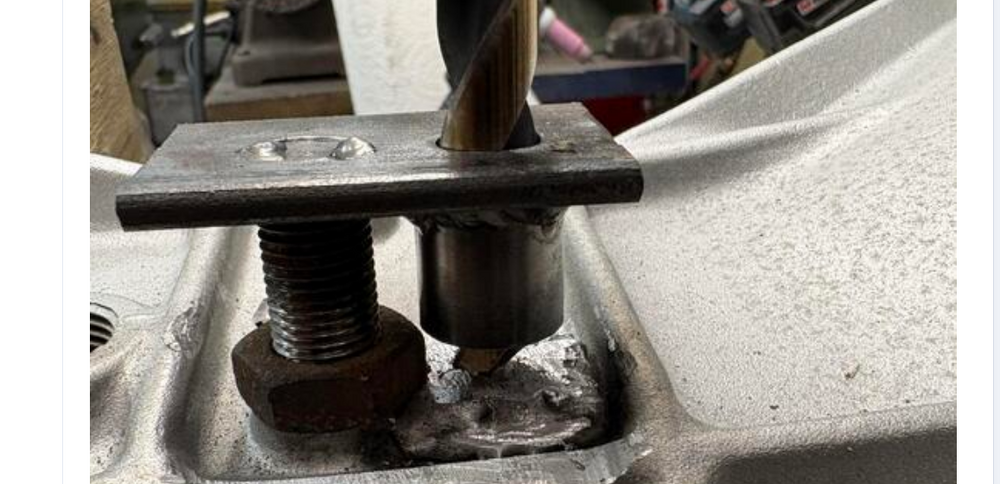
They show up on my Windows 10 with Chrome computer. Are you guys on phones? iphone, Android maybe? Here's a cut and paste of a portion.
-
Thanks, that works. Good stuff. While I was Googling I found that Tokico was purchased by Hitachi then spun off in to a separate company. Basically, it's just a name now. It's like holley.com and their collection of brand names. If you try to go tokico dot com you get taken to what looks like some sort of scam site. There's a web site that shows Tokico struts that pops up if you search for Tokico. "thetokiko"? It seems to be just a front for an Amazon store. https://thetokiko.com/ https://www.aftermarket.astemo.com/americas/en/automotive/suspension/shocks.html AI just regurgitates the marketing copy from Astemo. Be careful people!

-
Well, here's a new bummer. I uploaded many of the files in Resources area in the past but now I can't download them. Oh well.


-
If anyone has instructions for the various aftermarket things that are used on the Z's it would be worthwhile to take a picture and upload them to the Resources area. I'm pretty sure that I used to be able to find instructions for things like the Tokico struts but now they seem to be buried out in the cloud somewhere. Even the AI bots can't find them and are digging up comments and DIY videos from the internet and reporting them as certain "fact". We can't let the robots win! Act now.
-
Can you show the references that the AI used? Sometimes they pick up garbage as fact. Here's what Google's Gemini comes up with. The main link can't be verified. You can also see how different the results are between the two brains.


-
70 ft-lbs seems high. Is that Tokico spec or Nissan? I took a browse and see that that is Nissan's spec. A quick google comes up with different numbers for Tokico, but they varied. Can't find specific instructions for any of the Tokicos though. Even AI comes up with nothing except one defunct web site, American Muscle. Where is all of that electronic brilliance? Bummer. Good luck.

-
If the guy used flat tops in a bored and stroked block the N42's small chamber might have given a too-high compression ratio. Maybe he added a gasket to lower it. Cylinder pressures would be illuminating. Not sure you'd want to try to measure them with the front cover off but it might be possible. Interesting puzzle.
-
Thanks HAL. Ironically honestly.
-
Has the head been shaved? Maybe the guy overdid it. You can get an idea by looking at the head ID casting. N42, N47, E31, etc. The edge will be close to the the symbols. This one looks uncut. Holy moly on that price. https://jdm-car-parts.com/products/e31-head-for-datsun-240z-series-1-nos?srsltid=AfmBOooSCQQdZA1flBbQstx-oCBt4adJYn9eX779z2gKvZTRaaYCqXZE

-
So, there's a contradiction here. The top wire, the green one, has to have power for the alternator to work. There's hope. SteveJ will get you there.
-
I don't think that it's a ZX alternator. Pretty sure SteveJ has ID'ed it as a Frontier alternator.
-
Here's the pinout from the ZCD site.

-
I thought Green was connected to White with Black in your picture. I think that I'd take the alternator to a parts store and have it tested before doing much more.


-
It does look like a bad alternator, if you're sure that connector is making good connection. Did you unplug it to check for voltage? Looks like you have everything you need, don't know why it would not charge. Is that connector fully seated in the alternator? I don't know the pinout on that connector. Maybe SteveJ does. You have the top one connected to Lamp and the bottom connected to Sense. You didn't use the yellow wire, but it would cause you problems anyway since it's connected to the brake lamp check relay. All it should need is L and ground and spinning to charge.

-
I just looked at your picture. You have it set up in "one wire" fashion (maybe, I need to know where the white with black goes to). Why? You didn't say where you're measuring at. The B+ terminal or the battery. Can't tell where your wires are going. Could still be a wiring problem.