



Captain Obvious
Community Member
-
Joined
-
Last visited
Everything posted by Captain Obvious
-
Oh, and forgot.. Might be the lighting, but your paint on the rear taillight panel looks too light to me.
-
So... How did I know? My original did the same thing (on top), and the replacement I made on the bottom:

-
Oh, but beautiful car, by the way!!
-
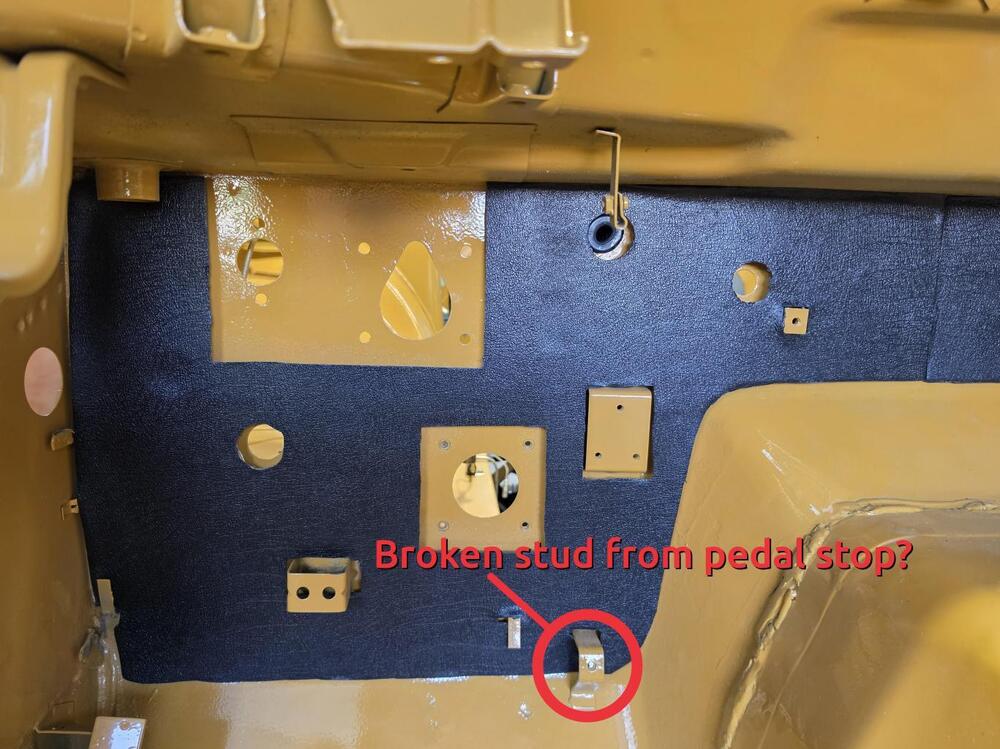
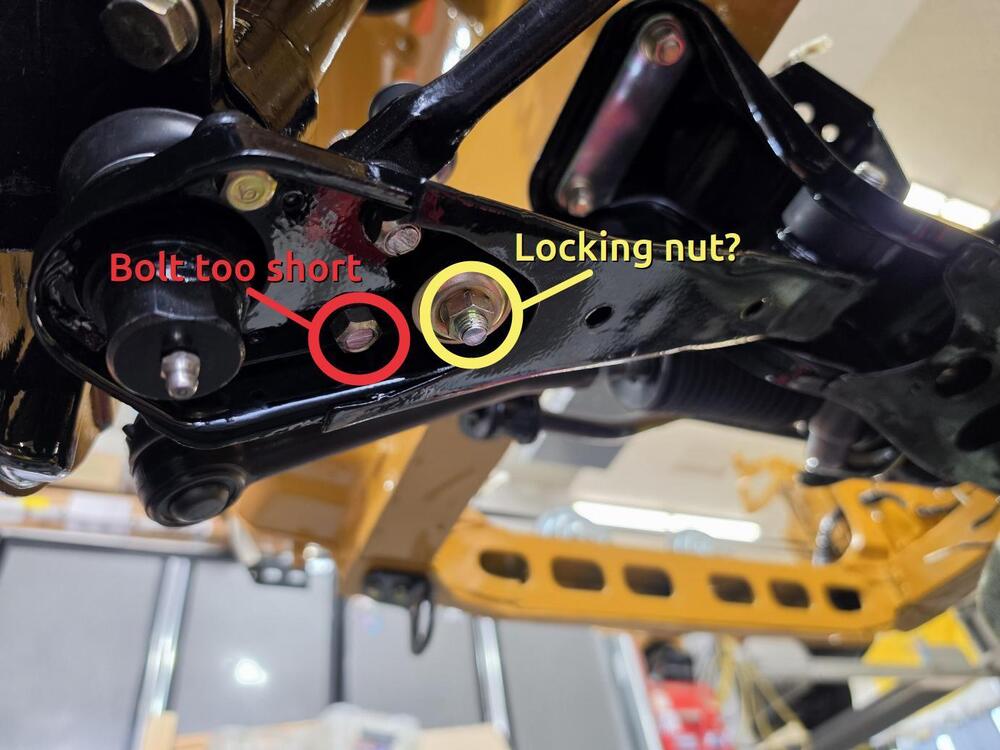
Couple comments / questions: Is this remnants of a broken off pedal stop stud? If so, would have been beneficial to address that before the paint. Water under the dam, but less risky of messing something up: And on the front suspension, it looks like you were a little over aggressive with the hacksaw shortening the bolts that hold the T/C rod in place. I think you need a couple more threads to take advantage of the deformed thread nuts anti-loosening feature. Also, it does not appear that the hardware for the sway bar links are the anti-loosening style? I haven't messed with a lot of them, but the sway bar links I've put in have the same sort of deformed thread nuts you have on the T/C bar. Here's what I'm talking about on the front suspension:
-
What you understand, unfortunately, is not correct. The wrong key should never be able to turn. If it is the correct key blank for that cylinder, it should insert just fine. But if it's not profiled to match the wafers (tumblers) in said cylinder, it should not turn. And if it does, it's because the lock is worn and should probably be replaced.
-
It all has to do with the way the lock mechanism wears. And it often wears in such a way that a key can get stuck in the lock. As far as getting the stuck key out, I'm thinking that with enough effort and finesse, you might be able to coax the WK back out. I'm thinking that with very gentle pressure while at the same time a couple hard raps on a hard surface (in the proper direction) might be able to move the tumblers inside enough to get the WK out? But honestly, if the lock is that badly worn, it's probably time to replace it anyway.
-
There is no "casual reversible" telescoping function to the steering column. It's designed to collapse or crush down some in length some in the event of an accident (think "accordion"), but no adjustments in length to make things fit better. I'll take a look at how mine fits together when I get a chance. Yours might be as designed?
-
Here's the wiring diagram I made for the early cars. The most recent version is Version 8, and. I'm not aware of any errors at this point. As far as I know, it's accurate. Version 8.0 found on page 7 of this thread: https://www.classiczcars.com/forums/topic/69026-1970-wiring-diagram/page/7/#findComment-676548 I think the single RL bullet hanging near your clock might be for the glove box light?
-
Whoa, whoa... Wait. There's absolutely nothing wrong with that. I made it 1000 miles to Nashville last summer!! 😇
-
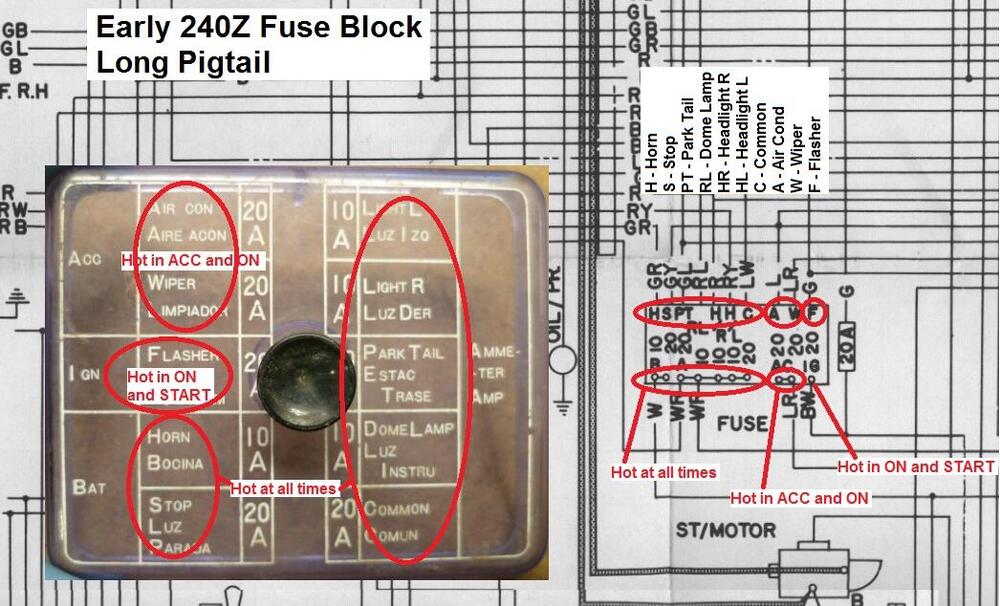
You should be able to disconnect any possible back feeding of the ignition system if you pull the third fuse down in the left column. The one labeled "Flasher". If power is back feeding through the voltage regulator, the gauges will still work and the brake warning lamp should stay on, but the engine should die because the ignition circuit will have no power.
-
The accessory relay is on the right side above the passengers knees. It shouldn't have any impact on ignition, but if you want to disconnect it to see if the issue goes away, you can do it like this. Note the disconnected four wire connector at the bottom of the pic: : And just to simplify matters, try pulling the top three fuses in the left column. They also should have no impact on ignition. The car should run without them. Pull the fuses marked Air con, Wiper, and Flasher: Just looking for experiments that would help diagnose what's going on.

-
Couple comments, answers, etc: Of the three thermostat housing sensors, the one on the left is crucial to the EFI. The middle one only has an impact on cold starts (controls the cold start injector), and the one on the right only controls the temperature gauge on the dash and has no effect on how the engine runs at all. The ground wire leading from the AFM base to the distributor is not original. Shouldn''t cause any harm though. Your ignition coil is not stock. I thought the 78 was the first year they did not employ the external resistor for the coil. You don't have a ballast, right? The device on the underside of the BCDD is a solenoid valve that disables the BCDD when the car is sitting still.
-
@kickstand80 , I was able to download and open the document. Haven't looked at any detail, but I was able to open it.
-
Nice work. A good rule of thumb: If you're bored and have some time to work on your Z, but don't have a specific project in mind.... Clean some connectors. 🙂
-
The short story is I need to replace the injectors on a buddy's Z and I gotta believe there are easier to find, cheaper options other than the original design. I've been intrigued by the problem found by some owners where it would fire with five connected, but not six. My assumption is that is only happens on the newer ECU's and there must be some kind of internal current monitoring and limiting. Five injectors don't hit the limit, but six puts it over the threshold and the ECU shuts down in self-preservation mode? I don't know why nowak1981's amazon injectors didn't work, and I'd like to know. I wasn't planning to be doing a lot of flow testing. More electrical testing. Resistance, impedance, that sort of thing.
-
Yeah, if you think you are the first person to be in there and nobody has messed with it before, then I would close it back up and not change anything. You could move that "back stop" spring if you really wanted to, but I'm not sure it would gain you anything. I'd probably just leave it be.
-
I'm no expert on the chronology of what Datsun did when, but I have high confidence that your car originally had four-screw round tops installed from the factory. I don't believe the three-screw round tops came out until the 72 "model year", and the Datsun parts manual supports that belief... Four-screws until 8/71 and three-screws from 9/71 until they went to the flat tops in 73. So, that said, I think the four-screw carbs would be the original version for your car. Ztherapy's question about the intake manifold is also something to look at... What number is on your manifold? An E46 is 4 screw, E88 is 3 screw." There should be a part number cast into your intake manifold runner. If that number is E46, then it would have originally been paired with 4-screw round tops. And if that number is an E88, then it would have originally been paired with 3-screw round tops. Of course, at this time, who knows what kind of mix-n-match of parts is on it at this point. Bottom line? For originality, I think you should be running four-screw round tops. But the pair you have pictured have drains on the bowls (which I think is not original). Do the bowls on the installed 3-screw carbs have bowl drains? They should, but if they don't then someone probably swapped the bowls from one pair to the other?
-
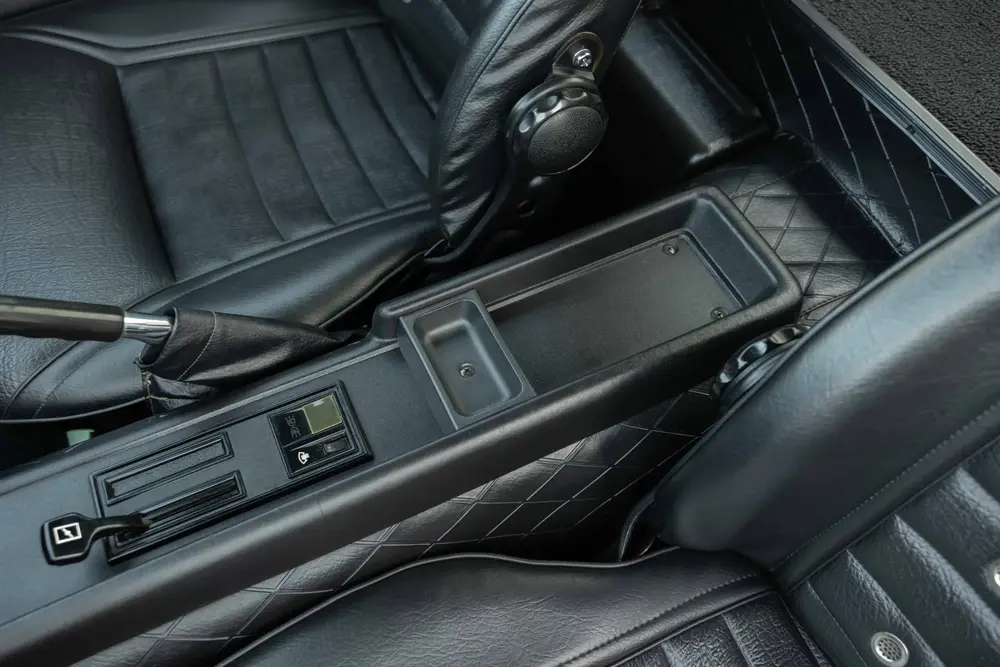
Black oval head Phillips.
-
That style (without the Phillips feature) was used through at least September 1970. VIN around 10000. I can attest to that with personal experience.
-
I do not believe that one in the auction is correct for an early car. My (limited) experience indicates that the original did not have a phillps feature in the center. I suspect that one on ebay was originally used in the hood bumper location, not the gas pedal stop. That said, it struck me as very Un-Japanese to use different parts in those two applications, so I wouldn't be surprised to learn that somewhere along the way they standardized on the same part in all three spots. But I believe on early cars the two hood bumpers had the Phillips feature, while the gas pedal stop did not.

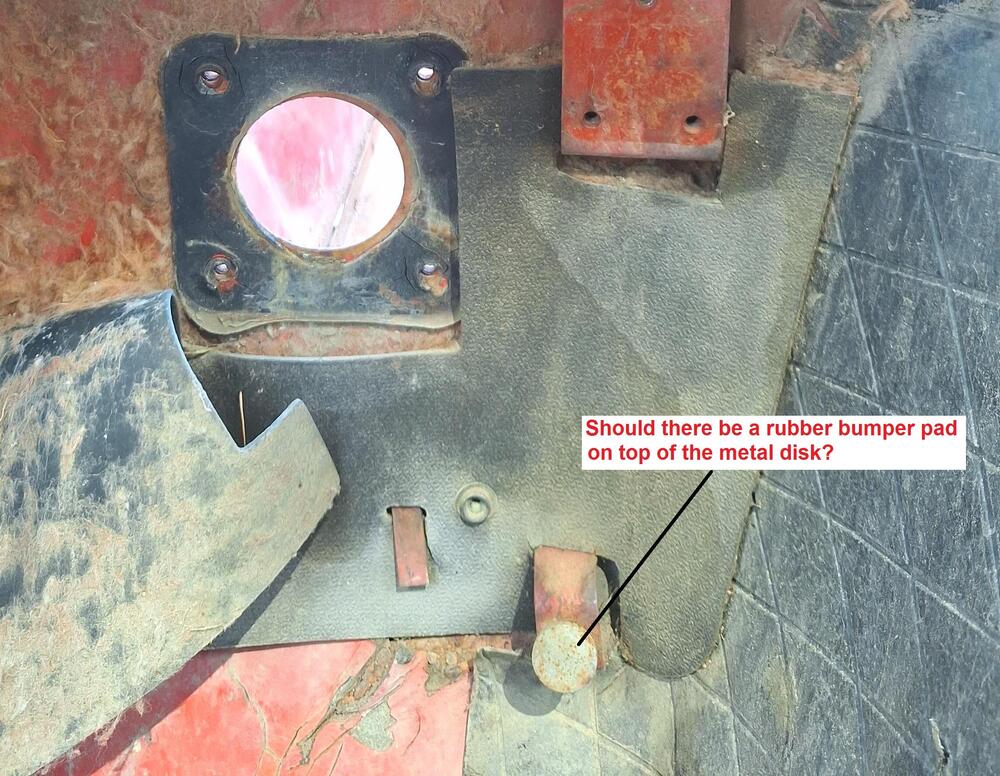 Yes. Different shape, but yes:
 I was there for ZCON, but CO is a little far for an off-duty house call. 🙂 So you're bailing on the injector thing and ordering a different set that has a better past reputation? I'm currently interested in hearing and investigating injector issues as I'm planing to mess with them here in the not too distant future. With some of my favorite humans:
 I'm just having a hard time believing that all six of your brand new injectors are dead on arrival. That's why I'm searching for a different answer. Where are you located?










Important Information
By using this site, you agree to our Privacy Policy and Guidelines. We have placed cookies on your device to help make this website better. You can adjust your cookie settings, otherwise we'll assume you're okay to continue.