Captain Obvious
Community Member
-
Joined
-
Last visited
Everything posted by Captain Obvious
-
I was wondering what those bosses were for. I couldn't find any internal feature that would explain the necessity for those on the outside. I got it now. So you were talking about tapering the fins so the part would release from the mold. In molding speak, they call that "draft", as in... "Are you sure you have enough draft on those surfaces so the part can be removed from the mold?" I'm no mold expert, but it's my understanding that you only need draft if you are splitting the mold open into reusable pieces such as opening a die after die-casting. You aren't doing that with sand or investment casting. With sand and investment casting, you remove the mold in little pieces and don't need to salvage any of the original mold. And because of that destructive (to the mold) process, draft is not required. Now, it might help for other reasons like better feature definition or mold filling without air pockets or porosity, but I don't think you specifically need draft like you would with a die-casting. As to the specific question... "How thin can I make the fins?" I would ask the foundry for guidance on that. And about the holes... I'm assuming you will be drilling all those in post-casting. You aren't going to to try to have any through holes cast right into the part, right? And about accuracy of "as cast" surfaces, I'm assuming you'll be machining any critical dimensions into the finished part. If there's a sealing surface or bolt hole, etc, you'll be finish machining that and not counting of that coming out of the mold with enough accuracy. The thicker the material, the greater the shrinkage. Lastly, have you talked to the foundry about the locations of gates and vents? In my experience, things to consider... Locations for gates and vents for proper fill and prevention of trapped air bubbles. Uneven or too rapid cooling. Sink marks on thicker sections or where different cross section thickness intersect. Porosity in the final part and how deep you need to machine precision surfaces. Warping or twisting of large parts. Sorry for the novel.
-
That's what I was asking. "Investment casting" is another name for lost wax.
-
I would expect one of the primary variables would be surface area. However, you should know... Thermo was my least enjoyed class of anything I ever had. Ever. And (like most people), I learn better when I like what I'm learning. @Jeff Berk, What casting method are they going to use? Are you going to supply them with a wax model so they can do an investment casting? Making a 3-D model that they will press into a sand casting? What?? Honestly, I can't get over the belief that someone is willing to do a one-off casting of that thing for $40!!! Unless you are supplying the consumable model and assuming all the risk of whether it works or not, I'm completely floored by that cost!!
-
You are correct that the higher sitting piston would pull the needle out of the jet tube further, but it's certainly not the same as raising the engine speed with the idle screw. Goes like this... Raising the engine speed with the idle screw increases the airflow through the carb (because you have opened up the throttle butterfly). That increased air flow will cause the suction piston to rise a small amount to keep the air velocity across the venturi constant. That's the whole theory of these CV carbs. In contrast, if you lift the piston using a protrusion on the underside of the piston (like the little nubbies you have discovered), you will actually DECREASE the air velocity across the venturi, and the result is a leaner mixture. The part I really don't understand is why didn't they use a same diameter insert as the original non-metallic bumper. I mean, I can see someone thinking their bumpers are all smooshed out and ineffective and wanting to replace them, but the part I don't get is why they thought they needed to drill out the piston to accommodate the replacement. Why didn't they reduce the diameter of the insert to fit the piston. Why permanently modify the piston???
-
Actually it would do just the opposite. It would lean out the mixture just like using the little lifter rod on the side of the carb body to push the piston up. Not sure how much with that amount of lift, but leaner none-the-less. That aside... The concept is pretty much stock. I'm sure you are familiar with the little non-metallic chunk (presumably Phenolic) pressed into the bottom of the suction piston. That little button acted as a bumper stop in a crude attempt to prevent metal to metal clunk when the piston bottomed out on the inside of the carb body. Are you sure that non-stock piece inserted is in fact metal? Is it magnetic? Hard to tell from the pics, but I wouldn't be surprised to find that it's a hard nylon or Delrin material. I'm thinking someone tried to replace there old smooshed out original bumper stop.

-
Glad to help. But out of curiosity... I believe more modern materials are better in pretty much every way than that old brown stuff. Why would you not use current age glass reinforced board material? I mean, I get originality, but in an area like that where it is completely invisible it seems unnecessary. You can get the new glass FR-4 in black color solder mask. Would that be "good enough"?
-
A little web digging turned up some search terms that might be helpful. FR-2 (predecessor to what we use today which I believe is FR-4) And a couple brand names: Pertinax Paxolin
-
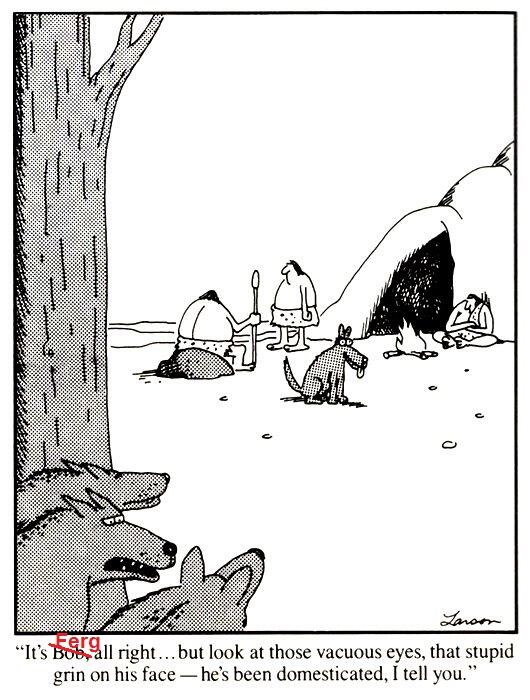
With apologies to Gary Larson
-
Whatever works. If you want to send one of the R160 shims, I can poke it with the tester. I'm sure 3.5mm would be thick enough. One would assume that the new 160 shims are similar to your old original, but stranger things have happened.
-
Agreed. Those look pretty much dead soft. (Annealed.) If you dare, you could hit the edge of your original factory shim with the file the same way and see how it compares? I think you could do that and not affect performance. That could give you something to compare against as far as what hardness you are looking for?
-
Well based on the application (king pin shims), I would assume they are relatively hard and would be suitable for the differential application. You can get a quick and dirty idea of how hard they are using a small hand file to see it it will cut those new shims. The corner of a small file will a) cut like butter, b) completely skate across the shim without cutting, or c) somewhere in between. You want "in between". Another thing you could try is if you fold one of those shims in half... Does it fold easy and stay pretty much completely folded? Does it snap into two piece? Or does it fold but springs back a bunch when you let it go. I think you want the third option. I know this is all just subjective words, but from a distance, that's all I got. And I may have mentioned this already, but I can run a Rockwell hardness test on parts if necessary to determine the Rockwell rating. Although I'm not sure it will be accurate on something as thin as .005.
-
Yeah, I'm not surprised about the minimum. At this point, I could probably be convinced to cut one part if you want to cover costs, etc. Send me a PM if you're interested.
-
What about @Zup? Any word?
-
I've heard people talk about a "diff clunk", right? Hahaha!! And I totally get you about the cold temps. I used to be able to work on cars in the cold. Not so much anymore. My hands just can't take it.
-
Maybe it's just me, but I suspect the first thing your machine shop is going to do is convert your drawing to English system. With that in mind, I'd just do it for them. I know any machinist ought to be able to do the conversion, but I'd just do it for them. Also, is the pinion shaft diameter smaller than 35mm? If so, you're good. But if the shaft is right at 35mm OD, then a 35mm ID spacer isn't going to fit over it. You'll need to open up the ID a couple thousandths just to get it to fit and not bind when you try to slide it on the shaft. As for material, I think 1045 in the annealed state would be a reasonable choice. It should certainly be harder than the 1008 stuff.
-
The only possible use for an amplifier like that in 72 would have been to kill the application of the throttle opener device as you came to a stop. But in order to do that, your throttle opener would have to be the defeat-able style design, and I don't think that even started until the flat top carbs. Does your throttle opener control valve even have a wire going to it?
-
Wow! That must have made quite the noise!
-
And what about @Zup? Anybody heard a peep. Hey FrogSquisher. You still read the forum??
-
My thoughts? I agree. Having not been through this exercise myself, I'm not sure of all the effects of changing the pinion position like that. Maybe you'll get lucky and end up exactly where you need to be. And if not, you'll have a better handle on the effect(s) of the change.
-
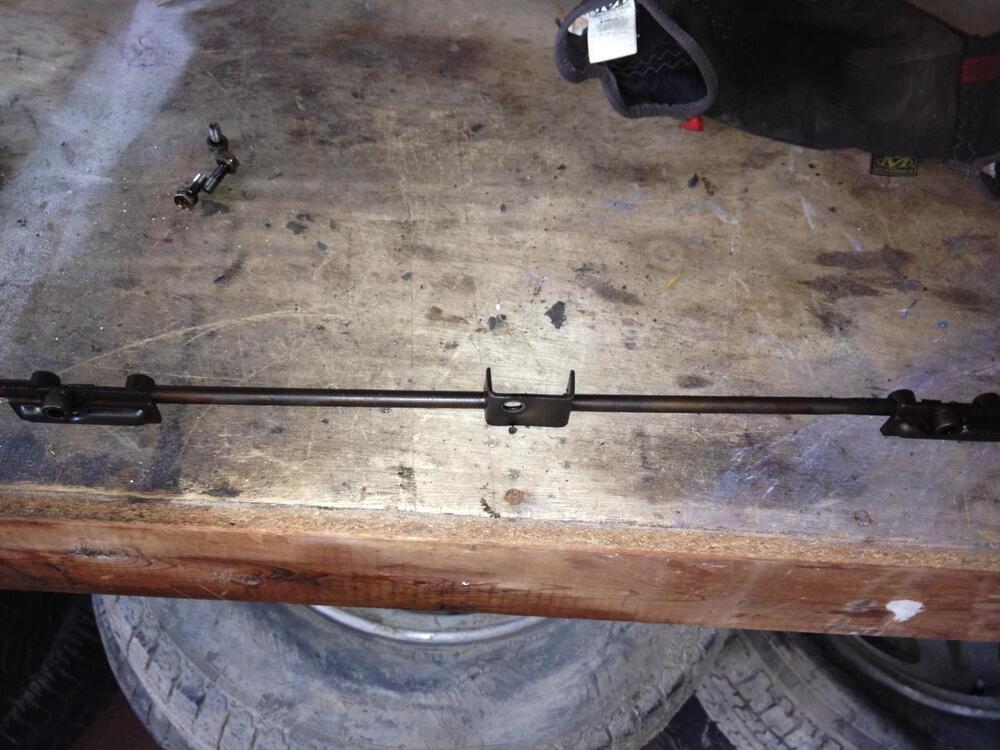
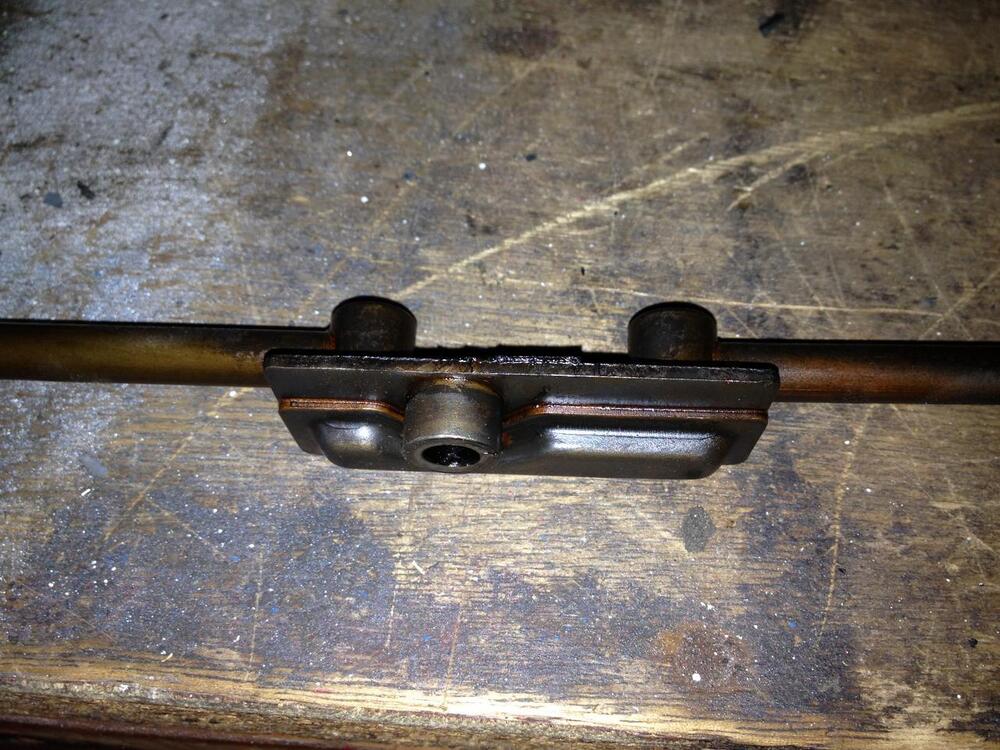
Speaking of such things... I'm looking for one of the newer design spray bars. Any of you guys who went to internally oiled cams have one laying around they don't need anymore? The later design that looks like this:
-
That would be my assumption as well. Little bit here makes a large change there. If your measurements are correct, I think you are going to bind with a 12 thousandth thicker shim in there. Did you ever use some thing shim material to try to figure out what thickness (total) you really need?
-
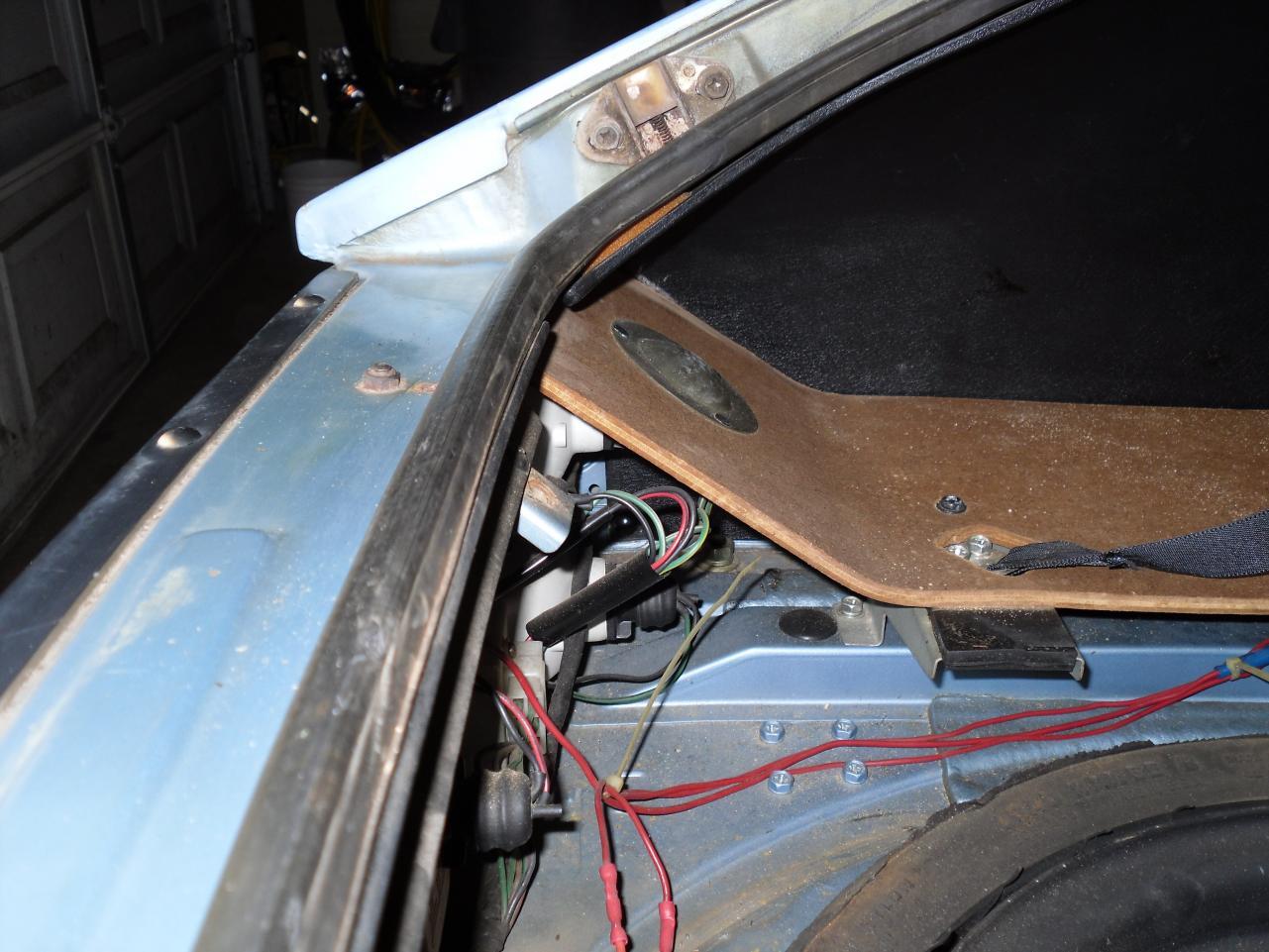
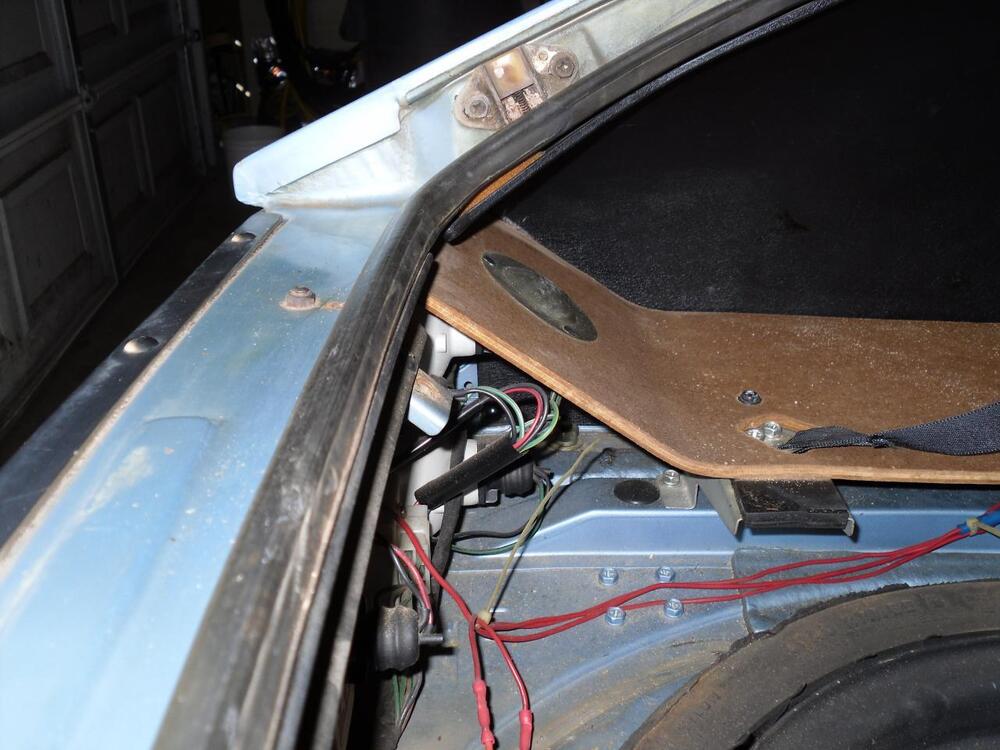
I've had two 77's over the years and both of them had the flat floor and a plastic interior panel over the taillights. Maybe they switched mid-year in 77, but it's definitely not strictly a 78 thing.
-
Here's a hoovered pic that might answer the question. I don't think you use the plastic panel at all if you have the sloped deck:
-
Well assuming the radio came from an earlier year Z, (which is what the wire colors seem to indicate), the white and white/black pair are the two wires that fed the original (one and only) speaker. The white is speaker (+) and the white/blk is speaker (-). There is no way to get "stereo" out of that radio. Ever. You could get sound to come out of more than one speaker maybe, but it will never be stereo. In order to get sound to come out of more than one speaker, you would just put them in parallel, but you do need to be careful about the loading. The radio was designed to drive one 8 Ohm speaker, and it sounds like you are trying to drive two 4 Ohm speakers in parallel. If that's the case, that combo works out to a 2 Ohm load and the amp probably isn't going to appreciate that much.
-
Yeah, I think the first order of business is to definitively figure out exactly what thickness you need to get correct lash. After that, you can figure out how to achieve that task. As for the question about grinding the new washer... I was going to suggest exactly that. Assuming the new washer is thicker than what you really need, then knocking the thickness of that one down to what you need would be my first choice. Only thing that would make that plan questionable would be if there were some sort of case hardening on the shim. You should be able to tell once it arrives. It's not yet even guaranteed that it will arrive though, is it?